Freediving Disciplines Explained: STA, DYN, CWT, FIM and More
The freediving disciplines in plain English: what STA, DYN, DNF, CWT, CNF and FIM mean, why no-limits diving is rare, and how competitions are judged.
Freediving disciplines are the standard ways of measuring a breath-hold dive. They’re split into pool disciplines, measured in time or distance (static, dynamic with fins, dynamic with bifins, dynamic without fins), and depth disciplines, measured in metres (constant weight with fins, constant weight with bifins, constant weight without fins and free immersion). Two sled-assisted categories, variable weight and no limits, sit outside normal competition because of their risk.
Most recreational freedivers never compete, but you’ll meet these abbreviations on every course, in every training log and in every argument at the dive centre café.
How freediving disciplines are organised
Three questions define almost every discipline:
- Where: in a pool (horizontal) or on a depth line in open water (vertical)?
- What’s being measured: time, distance or depth?
- How you move: with a monofin, with bifins, with no fins, or by pulling on the line?
There are two main international organisations. AIDA, founded in 1992, is dedicated to freediving. CMAS, founded in 1959, covers many underwater sports including freediving. They use slightly different names and rules, and each keeps its own records. The abbreviations below follow AIDA’s naming, which most freediving courses use.
Pool disciplines: STA, DYN, DYNB and DNF
| Discipline | Full name | Measured in | What you do |
|---|---|---|---|
| STA | Static apnea | Time | Float face down, still, holding your breath |
| DYN | Dynamic apnea with fins | Distance | Swim horizontally underwater with a monofin or bifins |
| DYNB | Dynamic apnea with bifins | Distance | The same, but bifins only |
| DNF | Dynamic no fins | Distance | Swim underwater with a breaststroke-style technique, no fins |
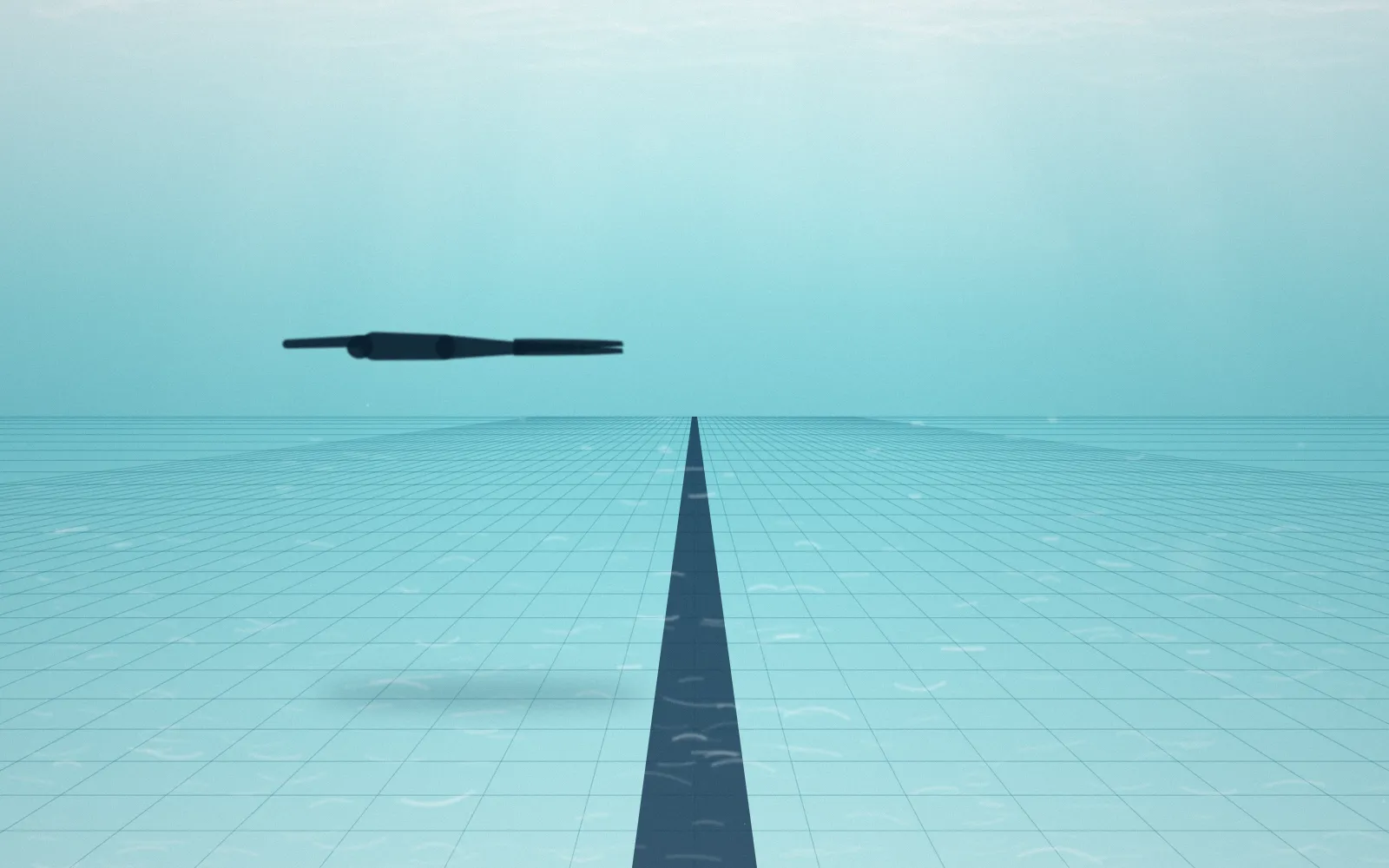
Static apnea (STA) is the purest test of breath-hold. You lie face down at the surface, usually with your coach beside you giving touch signals, and the clock runs until you lift your face. It’s mostly a mental discipline, because the challenge is staying relaxed through rising CO2 and strong contractions.
Dynamic (DYN) rewards efficient technique. Most top performances are done with a monofin, the single wide blade that drives a dolphin kick; our monofin basics guide explains how it works. DYNB was added as a separate category so bifin swimmers compete among themselves.
Dynamic no fins (DNF) is the most technical pool discipline. Every stroke and glide has to be timed perfectly, and it’s a superb teacher of streamlining and patience.
Depth disciplines: CWT, CWTB, CNF and FIM
| Discipline | Full name | How you move | What’s not allowed |
|---|---|---|---|
| CWT | Constant weight | Monofin or bifins, down and up | Pulling on the line (except to turn) |
| CWTB | Constant weight bifins | Bifins only, down and up | Pulling on the line, monofin |
| CNF | Constant weight no fins | Arm pull and breaststroke-style kick | Fins, pulling on the line |
| FIM | Free immersion | Pulling yourself down and up the line by hand | Fins |
“Constant weight” means you finish the dive carrying the same weight you started with. You can’t drop a weight belt halfway to help yourself up, which keeps the test honest.
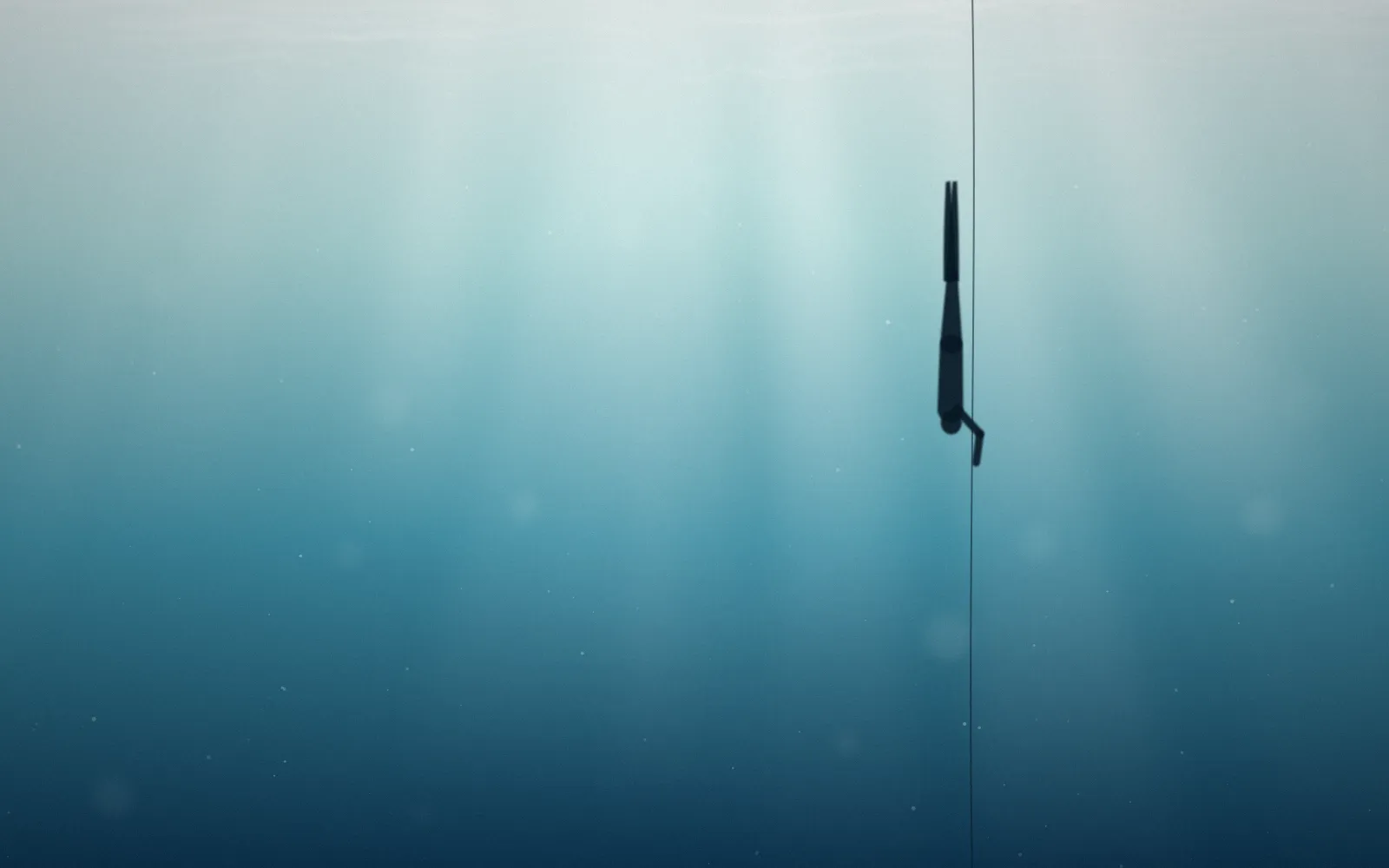
Constant weight (CWT) is the discipline most people picture when they think of deep freediving: a diver finning down a rope into the blue, turning at the bottom and finning back up.
Free immersion (FIM) is gentler and often the first depth discipline beginners try, because pulling slowly down the line gives you time and control to equalise. Our guide to free immersion technique covers the pulling style.
Constant weight no fins (CNF) strips everything away. It’s slow, elegant and very demanding, which is why its depths are much shallower than finned disciplines. See constant weight no fins for how people train it.
Variable weight and no limits: the sled disciplines
Two older categories use a weighted sled that carries the diver down a cable.
- Variable weight (VWT): you ride the sled down and return under your own power, finning or pulling up the line.
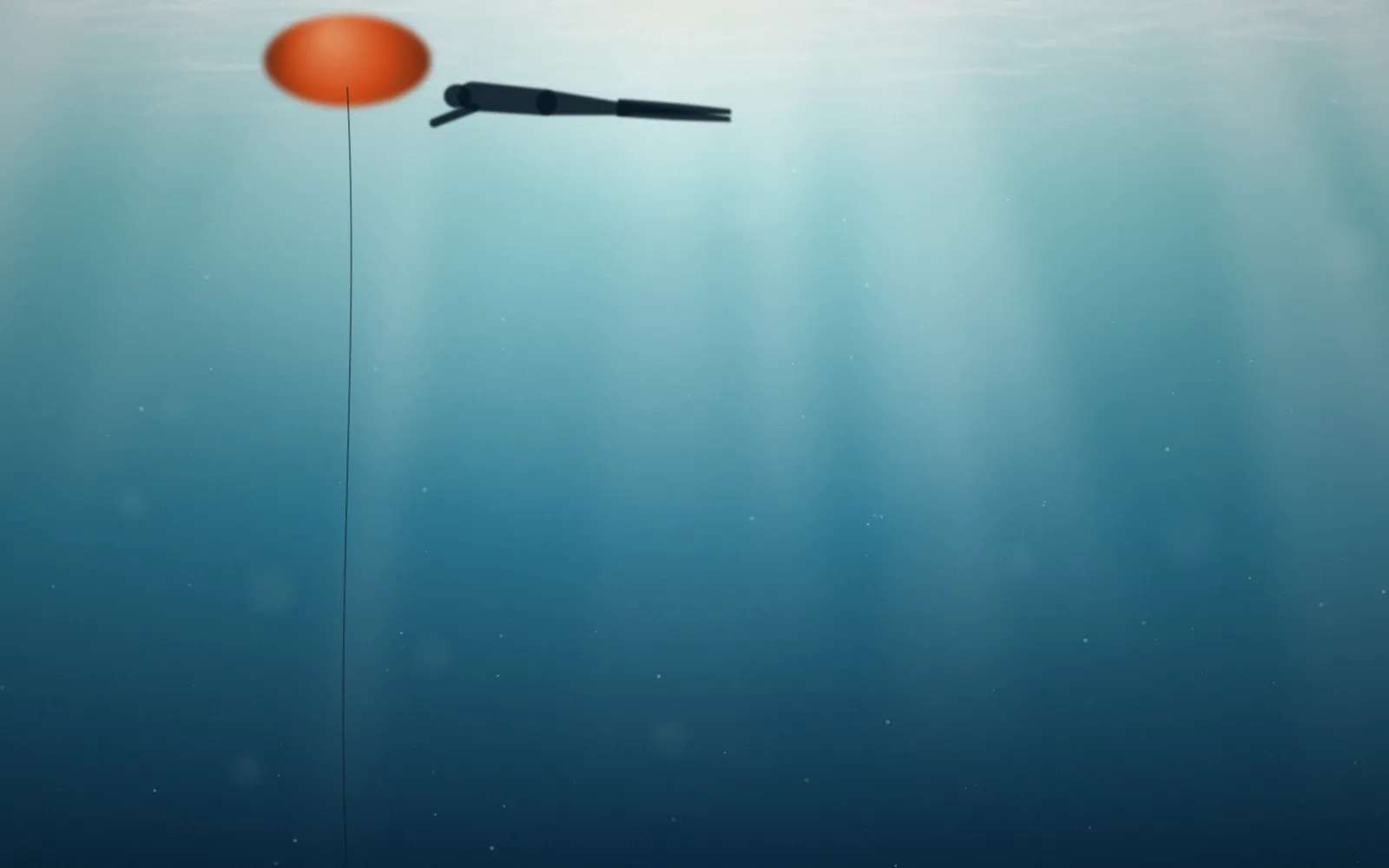
- No limits (NLT): you ride the sled down and come back up by any means, usually an inflatable lift bag.
These disciplines produce the deepest dives ever recorded, and they are rarely done because the margin for error is tiny. The descent is fast, equalisation at those depths is extremely difficult, and if anything fails at the bottom, the diver is a long way from air. The Austrian freediver Herbert Nitsch, famous for his no-limits dives, was seriously injured during a no-limits attempt in 2012. There are no regular competitions in these categories; occasional record attempts happen with large, specialised safety teams.
Safety: No-limits and sled-style diving are not training tools. Nobody should improvise a sled, a heavy weight or a lift bag to go deeper than their own ability. Every depth dive, at any level, needs a trained buddy or safety diver watching.
How a freediving competition works
Competitions look calm from the outside, but they’re tightly structured. The sequence goes roughly like this:
- Announcement. Before the event, each athlete declares an announced performance (AP): a target depth, distance or time.
- Official top. Each athlete gets an exact start time, the official top, and has a short window around it to begin the dive.
- The dive. In depth events, the line is set to the announced depth and the athlete must collect a tag from the bottom plate as proof.
- Surface protocol. After surfacing, the athlete must, within a short time limit (around 15 seconds under AIDA rules), remove facial equipment, give an OK hand signal and say a phrase such as “I am OK”, while keeping their airway out of the water.
- Judging. The judges show a card.
The cards are simple. A white card means a clean performance. A yellow card means the performance counts but with penalties, for example for missing the tag or surfacing short of the announced depth. A red card means disqualification, for things like a blackout, a loss of motor control or a failed protocol.
The protocol exists so judges can see that the athlete surfaced fully conscious and in control. It’s also why every freediver, competitor or not, should learn good recovery breathing: those first breaths decide how well the next 30 seconds go.
Which disciplines will you meet on a beginner course?
Entry-level courses usually introduce four disciplines:
- Static apnea in the pool, to show you how long you can relax on one breath.
- Dynamic with fins in the pool, to work on finning technique and streamlining.
- Free immersion in open water, as a controlled way to practise equalisation.
- Constant weight with fins in open water, as the main depth discipline.
Some instructors include a short no-fins swim too. You won’t meet sleds, and you shouldn’t.
If competition does catch your interest later, our overview of freediving competitions and how Indians can take part explains how people usually begin.
Trying the disciplines from an Indian city
You don’t need a coastline to work on half of these disciplines. A 25-metre pool in Bengaluru or Delhi is enough for DYN, DYNB and DNF practice, and a static breath-hold in the shallow end, with a trained buddy beside you, is the same skill wherever you are. Talk to the pool staff first, since many lifeguards have never seen deliberate breath-hold training, and keep your sessions short and structured.
Depth disciplines will wait for your next trip, but the skills behind them, especially equalisation, stretching and relaxation, can all be trained at home. We’re building an online community for Indian freedivers. It’s coming soon, so stay tuned.
Frequently asked questions
What is the hardest freediving discipline?
It depends on the diver, but many freedivers consider constant weight no fins (CNF) the hardest depth discipline. You descend and ascend using only a breaststroke-style arm pull and kick, so it is slow and technically demanding, and every inefficiency costs oxygen. That is why top CNF depths are much shallower than depths reached with fins.
What is the difference between AIDA and CMAS?
Both are international organisations that run freediving competitions and recognise records. AIDA was founded in 1992 and focuses entirely on freediving. CMAS, founded in 1959, covers many underwater sports, freediving among them. Their rules, discipline names and some events differ, so a record in one is listed separately from the other. Both also have education systems.
What does LMC mean in freediving?
LMC stands for loss of motor control, often called samba. It is a temporary loss of control over the body caused by low oxygen, usually just after surfacing, and can look like shaking or difficulty holding the head up. In competition, an LMC during the surface protocol earns a red card. In training, it means your buddy supports you and you rest.
Can beginners take part in freediving competitions?
Some pool competitions welcome newer athletes, and they are a good way to experience judging and protocol in a supportive setting. Organisers usually ask for proof of training or certification, medical clearance and insurance. Start with a pool event, announce conservative performances and read the organiser's rules carefully before you register.