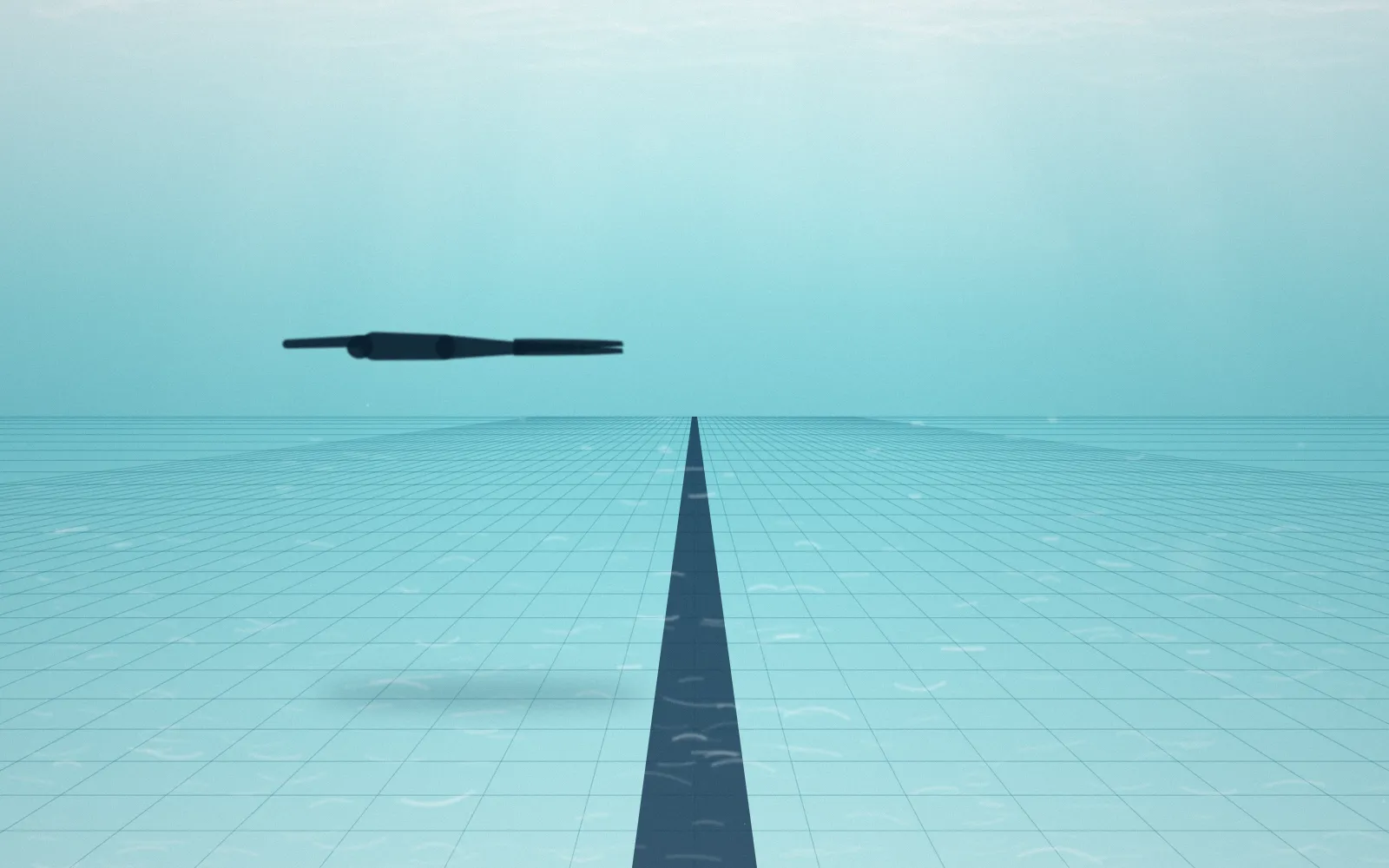
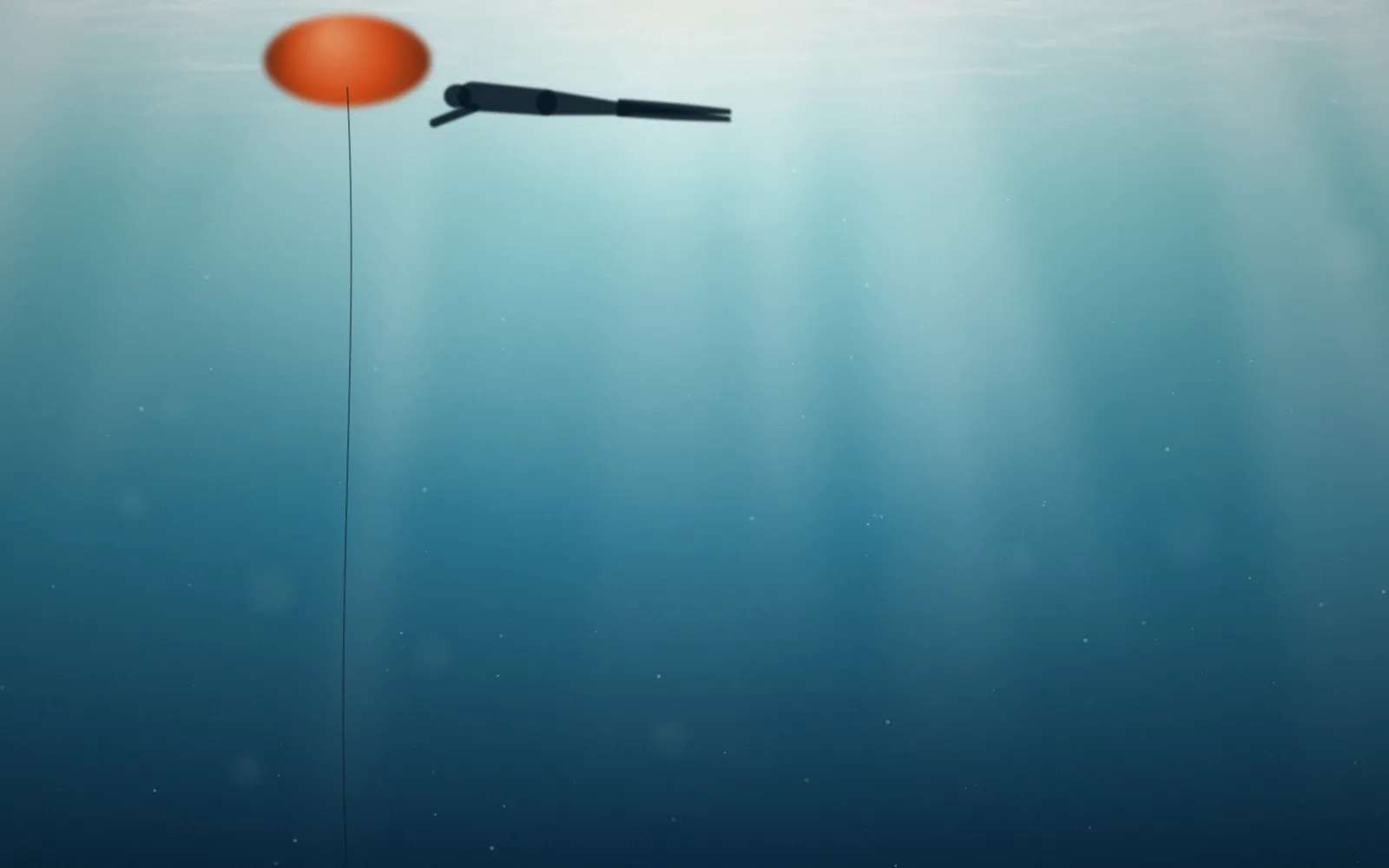
Constant Weight No Fins: The Hardest Way to Go Deep
Constant weight no fins (CNF) explained: the long arm pull and frog kick, why the glide matters, how to equalise between strokes and how to progress safely.
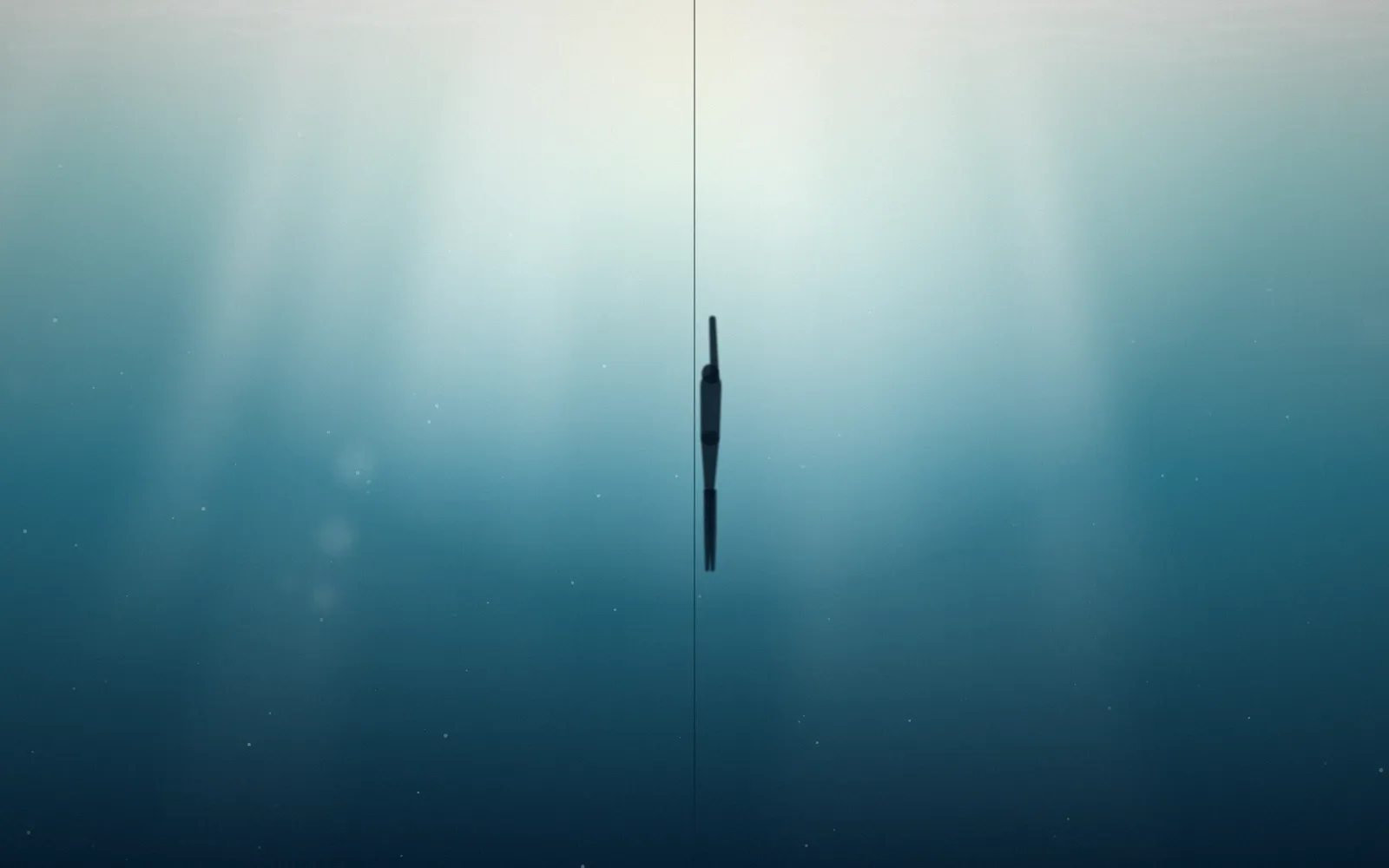
Constant weight no fins (CNF) is the depth discipline where you swim down a line and back up using only your body: a long breaststroke-style arm pull and a frog kick, with no fins, no pulling on the line and no dropping weights. It’s widely considered the hardest way to go deep, because a human body without fins is slow, and slow means long dive times. Done well, it’s also wonderfully efficient, built on long glides between strokes, and many divers who try it end up loving it.
This guide covers the stroke, the glide, equalising with busy hands, and how to build CNF into your training without rushing it.
What makes CNF so hard
Fins multiply the power of your legs. Without them each stroke moves you a shorter distance, so for the same depth you spend much longer underwater. The descent is long, the ascent from below neutral is longer, and you need to hold relaxed, efficient technique the whole way through.
At the same time, CNF uses big muscle groups in short bursts followed by long glides, so a well-swum dive can feel calm and unhurried. The hard part is patience and technique, more than strength.
Most divers’ CNF depths are noticeably shallower than their depths with fins, at least for a long while. That’s normal.
The CNF stroke, step by step
The stroke is related to swimming breaststroke but differs in important ways. In pool breaststroke the arm pull is short and your head comes up to breathe on every stroke. In CNF there’s no breathing, so the arm pull is long, finishing at your thighs, and each part of the stroke is followed by a glide.
A common sequence looks like this:
- Streamline. Start long, arms extended overhead, legs together, toes pointed.
- Arm pull. Sweep the arms slightly outwards, then pull back along the body all the way to your thighs. Long and strong, not quick.
- Glide with arms at your sides. Hold a long, narrow shape with your hands by your thighs and your head neutral. This is often the longest glide of the cycle.
- Recovery. Slide your hands up close to your body and forwards past your face, while drawing your heels up towards your bottom. Keep everything tight to the body to cut drag.
- Kick. As your arms extend forwards, kick: feet turned out, push water back with the soles and inner edges of your feet, then bring the legs together.
- Glide in streamline. Back to the start position, gliding until you begin to slow.
Instructors teach small variations, particularly in how the kick is timed against the arm recovery. Learn the version your instructor uses and stick with it while it becomes automatic.
The frog kick
The kick provides much of the propulsion in CNF, and it’s where most drag mistakes happen.
- Keep the knees fairly narrow on the recovery. Knees that flare wide push water forwards and slow you down.
- Flex your feet before the kick, toes pulled towards your shins and turned out, so the soles catch water.
- Finish with legs together and toes pointed, so you’re streamlined for the glide.
Hip mobility makes a big difference here. Baddha konasana (the butterfly stretch), a deep squat with heels on the floor, and gentle hip openers all help, and our stretching for freediving guide has more.
Why the glide matters so much
Glides are where CNF divers save oxygen. After each propulsive phase you hold a streamlined shape and let momentum carry you while your muscles rest.
The skill is knowing when to start the next stroke. Cut the glide short and you waste momentum you’ve already paid for. Glide too long and you slow almost to a stop, then have to accelerate your whole body again, which is expensive. Start the next stroke as you feel yourself clearly slowing.
Body position matters even more in CNF than in finned disciplines, because so much of the dive is spent gliding. Every lifted chin or bent elbow costs you, which is why our post on freediving streamlining is worth reading alongside this one.
Deeper in the dive, below your neutral depth, the glides lengthen and eventually you can freefall with your arms by your sides.
Equalising when your hands are busy
Equalising is one of the trickiest parts of CNF. Your arms are part of the stroke, so you can’t leave a hand at your nose.
The usual approach is to equalise during the glide with arms at your sides: bring one hand up to your nose, equalise, return it to your thigh and carry on. It takes practice to do this without breaking your streamline. Equalise early and often, especially in the first 10 m, where pressure changes fastest relative to depth.
Divers who can equalise hands-free have a real advantage in CNF, though not everyone can learn it. If equalising is already a struggle with fins, sort that out first, because CNF makes it harder.
How to progress into CNF safely
CNF rewards a patient, step-by-step approach. A sensible order:
- Pool: dynamic no fins (DNF). The horizontal version of the same stroke. Work on long strokes and long glides over short distances, well inside your limits. Our pool training guide has session templates.
- Count your strokes. On 25 m lengths, count stroke cycles. Over the weeks, aim for fewer at the same relaxed effort.
- Shallow CNF on a line. In open water, begin with easy dives to 5 to 10 m, focusing on stroke rhythm and equalising during the glide.
- Scout new depths in FIM first. Before trying a new depth in CNF, visit it in free immersion, where you can stop and control your speed easily.
- Add depth slowly. Small increments, and not every session.
Safety: CNF dives are slow, so dive times are long and hypoxia builds even on moderate depths. Dive only on a line with a lanyard, with a trained buddy following one-up-one-down, never hyperventilate before a dive, and turn early if anything feels wrong.
Ask your instructor where to attach your lanyard so it doesn’t foul your arm stroke.
Common CNF mistakes
| Mistake | Fix |
|---|---|
| Rushing from one stroke to the next | Glide until you feel yourself slowing |
| Wide knees on the kick recovery | Draw the heels up behind you, knees close |
| Head lifting during the arm pull | Eyes on the line, chin slightly tucked |
| Arms recovering wide of the body | Slide the hands up close to your chest |
| A short arm pull | Pull all the way to the thighs |
| Equalising only when it hurts | Equalise on every glide from the surface down |
How to start CNF this season
The pool is where CNF begins. Two sessions a week of short, technical DNF lengths, with a buddy watching every one, will do more than occasional long attempts. Monsoon months, when the west coast is closed for diving, are a good time to build this base. On dry days, work on hip and shoulder mobility.
Once you’re on a trip, use the first days on the line for FIM warm-ups and shallow CNF, then build from there. Stay tuned for the freediving.in community, launching soon.
Frequently asked questions
What is the difference between DNF and CNF?
Both use the same no-fins stroke, but in different directions. DNF, dynamic no fins, is swum horizontally in a pool and measured by distance. CNF, constant weight no fins, is swum down and back up a vertical line in open water and measured by depth. DNF is the usual place to learn and refine the stroke before taking it to the line.
Can beginners try no-fins freediving?
Yes, at shallow depths and short distances. Many beginners find a few no-fins duck dives or short DNF lengths a great way to learn body position and gliding. Keep it well within your comfort, with a buddy watching, and expect it to feel slower and harder than diving with fins. Serious CNF depth work comes later, ideally with a coach.
Why do freedivers call CNF the purest discipline?
Because nothing helps you move except your own body: no fins, no pulling on the line and no change of weight during the dive. Every metre comes from technique and efficiency. Calling it the purest discipline is an opinion rather than a rule, but it explains why CNF dives tend to earn particular respect among freedivers.
What should I wear for constant weight no fins?
In warm water, many divers do CNF in a thin, close-fitting suit, and a smooth outer skin helps the long glides. A thinner suit also means less weight to carry and smaller buoyancy changes with depth. In India's warm seas a thin suit is usually enough for warmth, though sun protection and comfort matter on longer sessions.