Freefall in Freediving: How to Stop Kicking and Sink
Freefall freediving explained: why you sink as air compresses, when to stop kicking, how to hold your body, equalising as you speed up and drills to try.
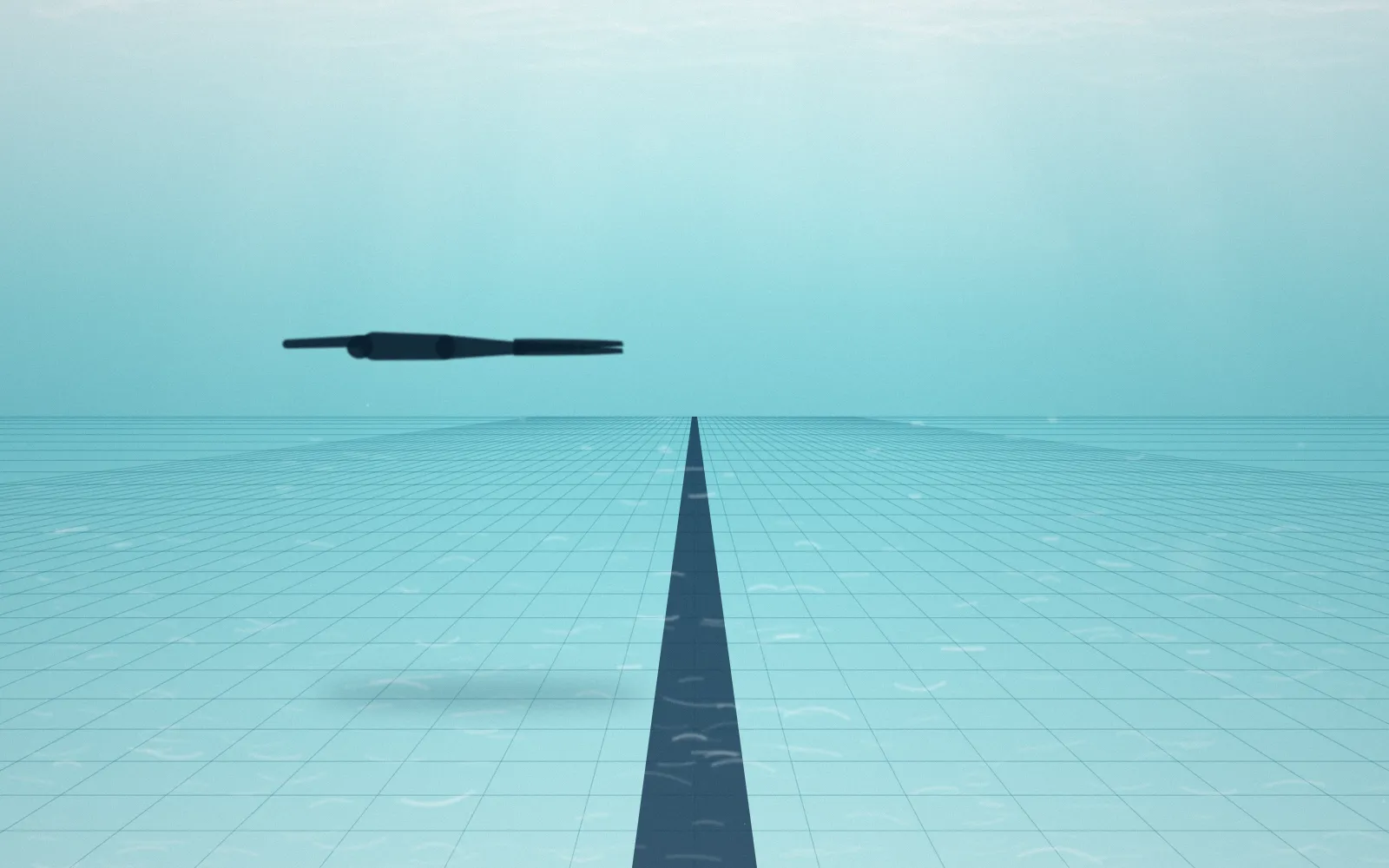
Freefall in freediving is the part of the descent where you stop kicking and simply sink, because water pressure has compressed the air in your lungs and wetsuit enough to make you heavier than the water around you. Done well, it’s the calmest phase of a dive: no muscles working, nothing to do but stay streamlined and keep equalising. Where freefall starts depends on your weighting, wetsuit and lung volume, but for many recreational divers it begins somewhere below 10 to 15 m.
It’s also the phase people misjudge most. Stop kicking too early and you stall in the water. Enjoy it too much and you forget that every metre you sank is a metre you have to swim back up.
Why you start to sink at depth
At the surface, with a full breath and a wetsuit on, most people float. As you descend, pressure increases by about one atmosphere for every 10 m of seawater, and the air in your lungs is squeezed into a smaller and smaller space. At 10 m it’s around half its surface volume, at 20 m around a third, and at 30 m around a quarter. Your wetsuit’s neoprene is full of tiny gas bubbles, and those compress too.
Less volume means less buoyancy. At some depth, the lift from your lungs and suit exactly balances your weight: that’s your neutral point. Above it you’re pushed up; below it you sink, slowly at first and then faster as you compress further. Our post on pressure and Boyle’s law works through the numbers.
Your speed doesn’t keep increasing forever, because drag rises as you speed up. You settle into a fairly steady sinking speed that depends on how heavy and how streamlined you are.
When does freefall start?
There’s no universal depth, because several things move your neutral point. Assuming everything else stays the same:
| Factor | Effect on where freefall starts |
|---|---|
| More weight on the belt or neck | Shallower |
| Thicker wetsuit | Deeper, because there’s more buoyant neoprene |
| Bigger breath | Deeper, because there’s more air to compress |
| Saltier water | Deeper, because denser water holds you up more |
| Leaner body | Usually shallower, though people vary a lot |
Most recreational divers training for depth are weighted to be neutral somewhere around 10 m, as described in our guide to weighting for freediving. With that setup you start drifting down gently just below 10 m and are usually in a proper freefall a few metres deeper. On a 15 m dive you may barely freefall at all; on a 30 m dive, a good part of the descent can be freefall.
How to make the transition from kicking to sinking
Going straight from full kicks to nothing is the classic mistake. You lose speed suddenly and end up hovering at neutral, going nowhere, using oxygen while you decide whether to kick again.
A smoother approach:
- Kick normally through the buoyant zone. Long, relaxed kicks from the hips for the first several metres.
- Reduce gradually as you approach neutral. Fewer kicks, the same length, more glide between them.
- Add one or two final kicks just past neutral. They carry you into the zone where you’re properly negative.
- Stop and settle. Bring your legs together, point your toes and let the water take you.
If you feel yourself slowing towards a stop, add another kick or two. Kicking a little longer is better than stalling. With experience you’ll learn exactly where on the line to stop, and a depth alarm on your watch set to that point is a handy reminder.
Body position during freefall
In freefall, body position decides how straight and how fast you fall.
- Head neutral, eyes on the line beside you, chin slightly tucked. Looking down at the bottom tilts you and adds drag.
- Legs together and straight, fins together, toes pointed. Splayed fins act as a brake and can turn you.
- One hand at the nose, ready to equalise. The other arm rests along your body or sits loosely forward near the line, depending on how you were taught.
- Close to the line without holding it, if you’re diving constant weight. Drifting off the line is usually a sign of a tilted head or uneven legs.
You can freefall in free immersion too. Stop pulling below neutral and let your hand slide loosely down the line, as covered in our free immersion guide.
Relaxing in freefall
Freefall is a gift for relaxation, if you can accept it. Many divers find it the hardest mental part of the dive: you’re going deeper and faster while doing nothing about it.
Use the time to scan your body. Release your jaw and tongue (apart from whatever is doing the equalising), drop your shoulders, soften your hands, let your face go slack. Some divers close their eyes and count equalisations. The relaxation techniques you practise on a yoga mat at home are exactly what you use here.
Try not to check your computer every few metres. Set the alarm and trust it.
Equalising when you’re speeding up
There’s a catch. Freefall makes you faster, and faster means the pressure changes more quickly, so your equalisation has to keep up.
- Equalise more often, not harder. Small, frequent equalisations, roughly every metre.
- Slow down if your ears fall behind. In training you can spread your arms a little, angle your body or brush the line with your hand to brake. Don’t carry on with pressure building in your ears.
- Know where lung-air equalisation runs out. As your lungs compress, there’s less air available to push into your mouth and ears. Many divers find Frenzel gets difficult somewhere in the 20s or 30s of metres, depending on lung volume and flexibility, and that’s where mouthfill equalisation comes in. Learn it with an instructor.
Freefall is free, but the ascent isn’t
Below your neutral point you’re negative, so the first kicks off the bottom are the hardest of the whole dive. The deeper you freefall, the heavier you are at the turn and the longer you spend working against that weight on the way up.
That’s why depth should increase slowly, a couple of metres at a time, rather than seeing how far the freefall will take you. It’s also why your weighting shouldn’t make you neutral too shallow, which starts the freefall early and makes the ascent brutal. Big jumps in depth and tension at depth are both associated with lung squeeze, so stay relaxed and let depth come gradually.
Safety: Freefall dives belong on a line, with a lanyard, and with a trained buddy who follows one-up-one-down and meets you on the way up. Never hyperventilate before a dive, and never let a comfortable descent tempt you past the depth you planned.
What to try on your next depth session
- Find your neutral point. On a free immersion warm-up, stop around 10 m, relax with a loose hand on the line and notice whether you drift up, hang or sink. Write it down.
- Count kicks to freefall. On a few easy constant weight dives, count how many kicks it takes before you can stop. Aim for consistency rather than a low number.
- Practise the transition. Spend one whole dive on the gradual reduction only: kick, kick, glide, kick, glide, stop.
- Release one area per dive. During the freefall, pick one part of the body to let go of each time: jaw, then shoulders, then hands.
Stay tuned for the freediving.in community, launching soon.
Frequently asked questions
At what depth do you start sinking when freediving?
It depends on your weights, wetsuit, lung volume, body composition and how salty the water is. Many recreational divers are weighted to be neutral around 10 m, so they begin to sink gently just below that and freefall properly a few metres deeper. A thick suit with little weight pushes that point deeper; more weight brings it shallower.
Is freefall faster than kicking?
It can be similar, and sometimes faster, once you are deep and well streamlined. Speed builds as the air in your lungs compresses, then levels off because drag increases with speed. The real advantage is cost rather than speed: your leg muscles are resting, so you use less oxygen and stay more relaxed, which leaves more in reserve for the ascent.
Do you need a neck weight to freefall?
No. Freefall happens with any weighting system once you are below your neutral depth. Some divers like a neck weight because it keeps weight close to the chest and helps a straight head-down position without a belt sliding. Others use only a belt. Which suits you depends on your body and discipline, so discuss it with your instructor.
Why do I drift away from the line in freefall?
Usually because your body is not symmetrical: head tilted, fins apart or one arm sticking out. Even small asymmetries steer you as your speed builds. Bring your fins together, point your toes, keep your head neutral with your eyes on the line, and stay close beside it. A short video from your buddy will show exactly what is pulling you off course.