Free Immersion: How to Pull Yourself Down the Line
How to do free immersion well: long slow pulls from the back, a neutral head, equalising between pulls, and drills that make FIM an ideal warm-up on dive days.
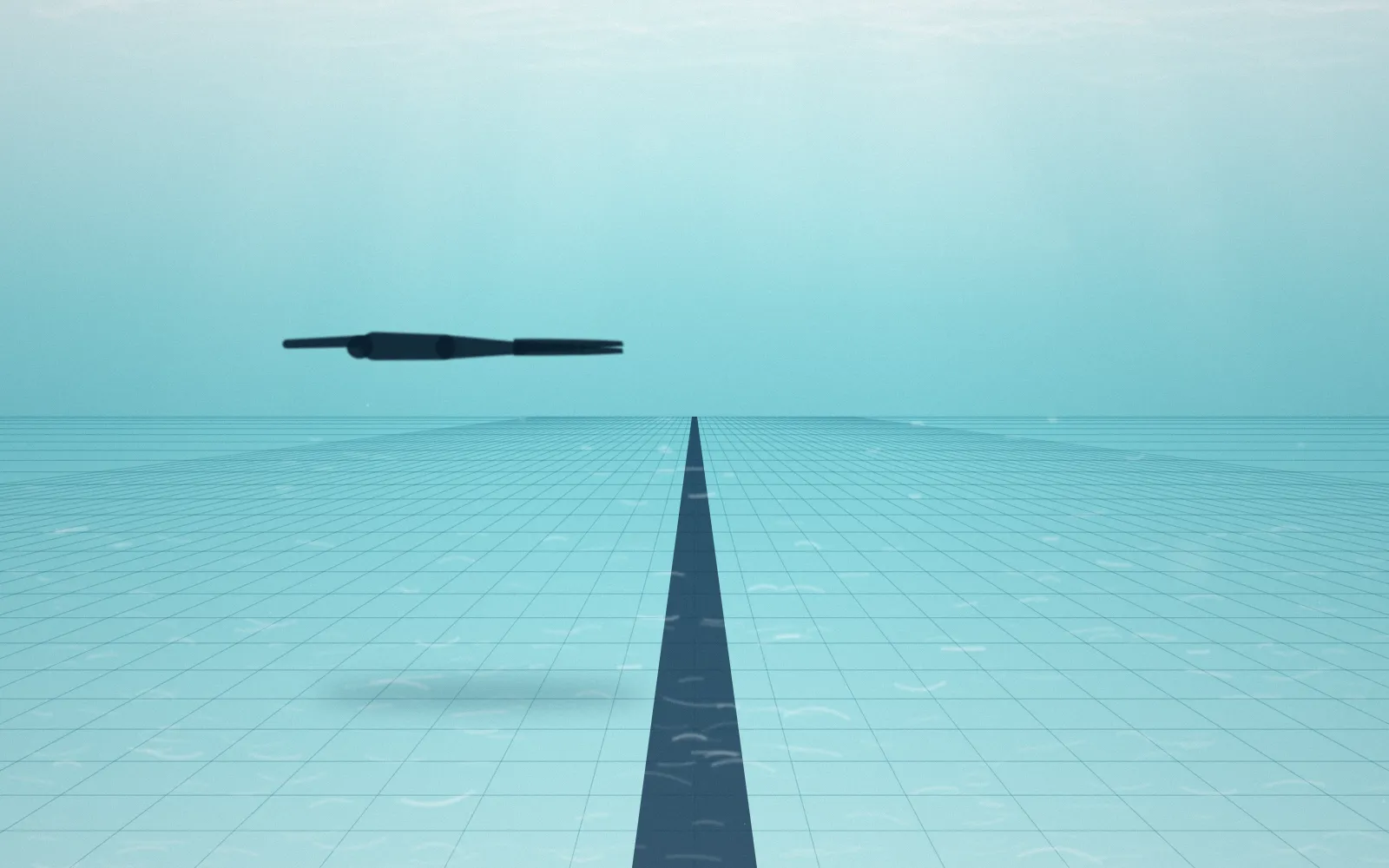
Free immersion (FIM) is a depth discipline where you pull yourself down a vertical line hand over hand, and back up the same way, without fins. Good technique is slow and long: reach ahead, pull with your back rather than your biceps, glide, and keep your head neutral instead of looking down the line. Because your hands control the speed and you can stop at any moment, free immersion is one of the best ways to warm up, practise equalisation and get used to a new depth gently.
It’s often the first discipline students try after learning the duck dive, and plenty of experienced divers use it on every training day even though they never compete in it.
What free immersion is good for
In competition, FIM is a discipline in its own right; our guide to freediving disciplines covers how it sits alongside the others. For most recreational divers, though, it’s a tool.
- Warm-up dives. A couple of easy FIM dives at the start of a session let your body adapt to pressure before you put your fins on.
- Equalisation practice. You can descend as slowly as you like, stop, go back up a metre and try again. That’s much harder to do while kicking.
- Depth adaptation. When you approach a new depth, FIM gives you fine control over speed and the option to turn at any point.
- Relaxation. No fins, no kicking, fewer moving parts. It’s a quiet way to dive.
- Turn and freefall practice. You can rehearse turning and sinking with a hand on the line, without fins complicating things.
Free immersion technique: the pull
The basic pull is simple. One hand reaches ahead along the line, takes a light hold and pulls the line past your body down to your hip or thigh. You glide. Then the other hand reaches and pulls. The details are where people go wrong.
Long pulls, not quick ones
Reach comfortably ahead, roughly to the top of your head, rather than a full stretch that hunches your shoulder up to your ear. Pull all the way down to your hip. One long, slow pull moves you further and costs less oxygen than several short, quick ones.
Pull with your back
The power should come from your lats, the big muscles along the sides of your back, not from bending your elbow. A useful cue is to pull the line down with your elbow rather than your hand. If your biceps ache after a FIM session, you’ve been pulling with your arms.
Glide between pulls
After each pull, let the movement carry you. You’ll feel yourself slow down, and that’s when the next pull starts. Below your neutral depth the glides lengthen as you begin to sink on your own.
Keep the line close and on one side
The line should run close to your body, just in front of one shoulder, so you pull straight down rather than across yourself. If it drifts out in front of your face, you start to spiral around it. Pick a side and keep the line there for the whole dive.
Hold it like a pen
Grip the line just firmly enough to pull. A white-knuckle grip sends tension up through your forearms, shoulders and neck, and tension costs oxygen.
Head position and equalising on the line
Your head stays neutral, in line with your spine, with your eyes on the line just in front of you or on your hands. The urge to look down the line towards the bottom is strong, and worth resisting. Lifting your head arches your neck and back, makes you less streamlined, and many divers find it makes equalising harder too.
FIM makes equalising easier in one way, because you’re slower, and harder in another, because your hands are busy. Divers usually handle it in one of two ways.
- One hand pulls, the other equalises. Keep one hand at your nose and pull with the other arm, switching partway if it tires. You can equalise almost continuously, which suits shallower dives and anyone working on their ears.
- Alternate pulls and equalisations. Pull with both arms in turn and bring a hand to your nose between pulls. It takes more coordination but gives a smoother descent.
Either way, equalise early and often, well before you feel pressure. If you’re struggling, FIM lets you slow to almost nothing and try again, which is why it features in our post on why you can’t equalise. On land, these desk equalisation drills build the habit before you ever reach the line.
Feet-first descents
Some instructors use feet-first descents on the line as an equalisation exercise, because many people find equalising easier with the head up. You lower yourself hand over hand, feet first. It’s slow and feels a bit odd, but on days when head-down equalising isn’t working it can help you find your ears and your confidence. Ask your instructor before trying it.
The turn and the ascent
At the bottom, or at whatever depth you’ve chosen, take the line in both hands and let your legs swing down so your head comes up. Keep your eyes on the line throughout. Our guide to the freediving turn covers this in more detail.
On the way up, use the same long, slow pulls. The first pulls off the bottom are the hardest because you’re negatively buoyant, so take them steadily rather than hauling. Keep your head neutral and save looking up at the surface for the last few metres. As you rise you get lighter and the glides lengthen again.
Safety: FIM is a line discipline. Wear a lanyard clipped to the line, and dive with a trained buddy who follows one-up-one-down and meets you on the way up. Never do FIM, or any breath-hold dive, alone, and never hyperventilate before descending.
Our post on freediving lanyards explains how to set one up so it slides freely while you pull.
Common free immersion mistakes
| Mistake | Fix |
|---|---|
| Short, fast pulls with bent elbows | Reach long, pull to the hip, then glide |
| Looking down the line at the bottom | Eyes on your hands or the line just ahead |
| Spiralling around the line | Keep the line on one side, close to your shoulder |
| Gripping too hard | Hold the line lightly, like a pen |
| Hauling on the ascent | Steady pulls; the first ones off the bottom are the hardest |
| Equalising only when it hurts | Equalise every pull or two from the surface down |
FIM drills for your next open-water trip
Most Indian divers only get to a line a few times a year, so it pays to plan your FIM work before you fly to Port Blair or wherever you’re heading.
The pull-count dive
At an easy depth, around 8 to 10 m for most newer divers, do three FIM dives and count your pulls on the way down. Each time, try to take one or two fewer by reaching longer and gliding more. Note the numbers in your log.
Stop and hang
Pull down to a comfortable depth, stop, hold the line loosely and spend a few calm seconds there. Equalise, relax your face and shoulders, then pull back up. It builds comfort at depth without stretching your dive time.
The release
Below your neutral depth, stop pulling and let your hand slide loosely down the line as you sink. It’s your first taste of freefall, with a hand on the line to stop yourself whenever you want.
Land rehearsal
At home, stand tall and rehearse the pull: one arm reaches overhead, then pulls down past your ear to your thigh, slowly, while the other hand sits at your nose doing a gentle equalisation. It feels silly in your living room, and it also makes the movement automatic before you’re on a boat where every hour of line time counts.
The freediving.in community is coming soon. Stay tuned.
Frequently asked questions
Is free immersion easier than constant weight?
It depends on what you find hard. FIM uses no leg effort and lets you slow down or stop on the line at any moment, which many newer divers find reassuring. But it is usually slower, so dive times are longer for the same depth. Many divers find FIM best for warm-ups and equalisation work, and constant weight better for reaching depth efficiently.
Do you wear fins for free immersion?
No. Free immersion is done without fins or any other propulsion aid; you move only by pulling on the line. You still wear your usual mask, a wetsuit if you need one, weights set for your target depth and a lanyard attached to the line. Leaving the fins off makes the dive quieter and simpler, which is part of its appeal.
Can you practise free immersion in a pool?
Only in a limited way. Most pools are too shallow for a real line dive, although some diving wells are deep enough to hang a weighted line if the pool allows it. In a regular pool you can rehearse the arm movement, the light grip and the head position, then save actual descents for open water with a trained buddy.
Why do my arms get tired doing free immersion?
Usually because you are pulling with your biceps instead of your back, gripping the line too tightly, or taking short, quick pulls. Reach comfortably ahead, lead the pull with your elbow down to your hip, and glide between pulls. If your forearms still burn, relax your grip further and slow the whole dive down.