Freediving Streamlining: Head, Arms and Body Position
Freediving streamlining in plain terms: where your head and arms should be, why drag rises so fast with speed, gear that slows you down and drills to fix it.
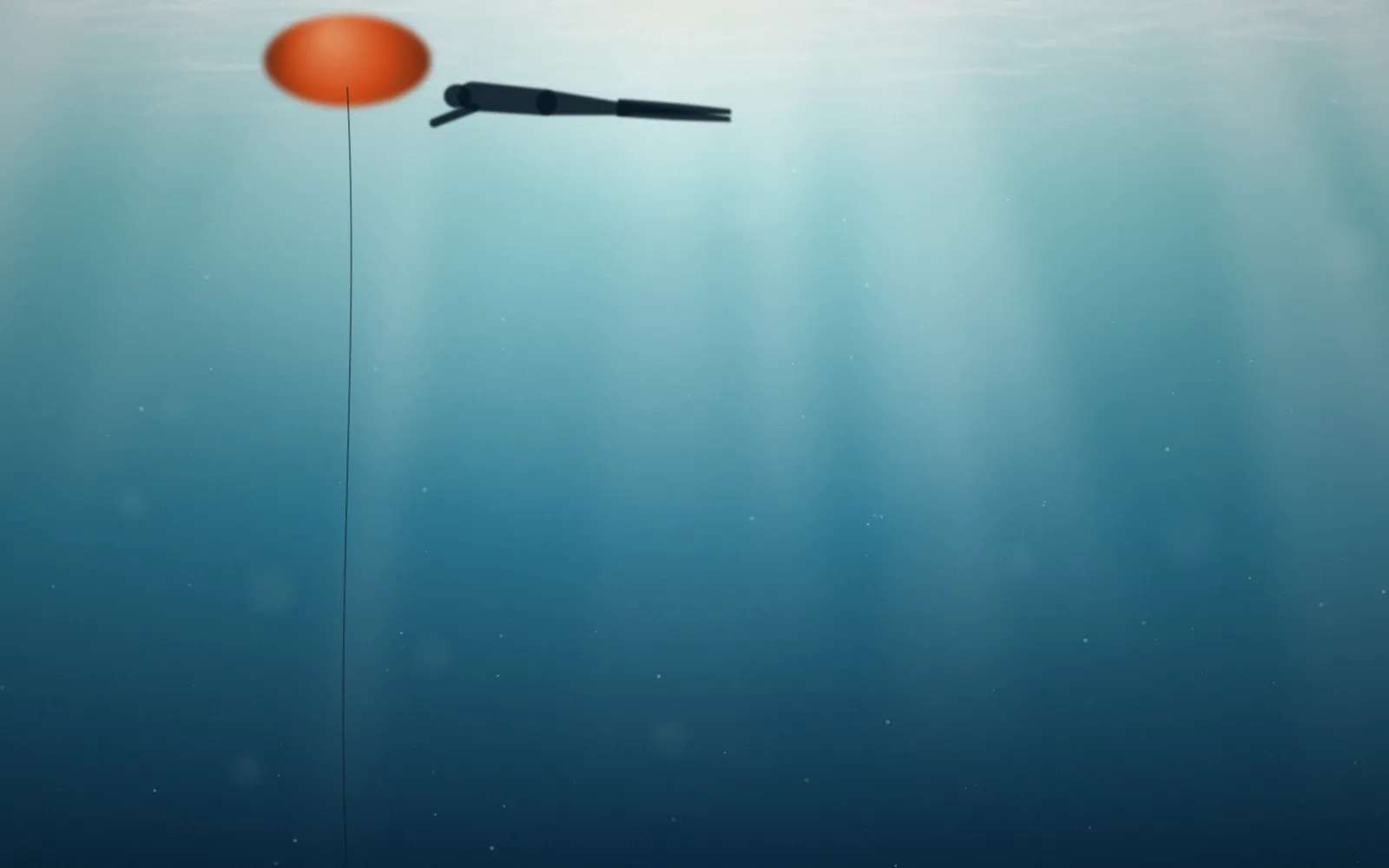
Freediving streamlining means holding the body shape that slips through water with the least resistance: head neutral and in line with your spine, arms either locked in a streamline overhead or still along your body, core lightly engaged, and legs together and straight between kicks. Good body position means every kick or pull carries you further for the same oxygen. It’s also the cheapest improvement in freediving, because it costs nothing but attention.
The catch is that you can’t see yourself. Most people who feel straight in the water are actually curved, arched or tilted, which is why this post is half explanation and half drills.
Why streamlining matters: drag in plain terms
Water is roughly 800 times denser than air. Anything that sticks out, bends or wobbles has to shove that water aside, and it costs you energy every time. Swimmers and freedivers usually talk about two kinds of drag.
- Form drag comes from your shape and how much frontal area you present. A head lifted to look forward, elbows poking out or hips sagging all make you a bigger, blunter object.
- Friction drag comes from surfaces: skin, hair, a baggy rash guard, a loose wetsuit.
The important part is that drag rises steeply with speed, roughly with the square of your speed. Go a little faster and you pay a lot more. That’s why efficient freedivers look slow and smooth: they cut drag first and only then add power. A poor streamline forces you to kick harder, which raises your speed briefly, which raises the drag, and around it goes.
Head position: the biggest single fix
Your head is heavy and sits at the very front of your body, so where you point it decides a lot.
On a depth dive, keep your head neutral and in line with your spine, chin slightly tucked as if you were holding a small lime under it. Your eyes rest on the line just in front of you or on your leading hand. Don’t look down the line at the bottom. It’s the most natural thing in the world and one of the most common faults: your neck extends, your upper back arches, you lose your streamline, and many divers find equalising gets harder with a tense neck.
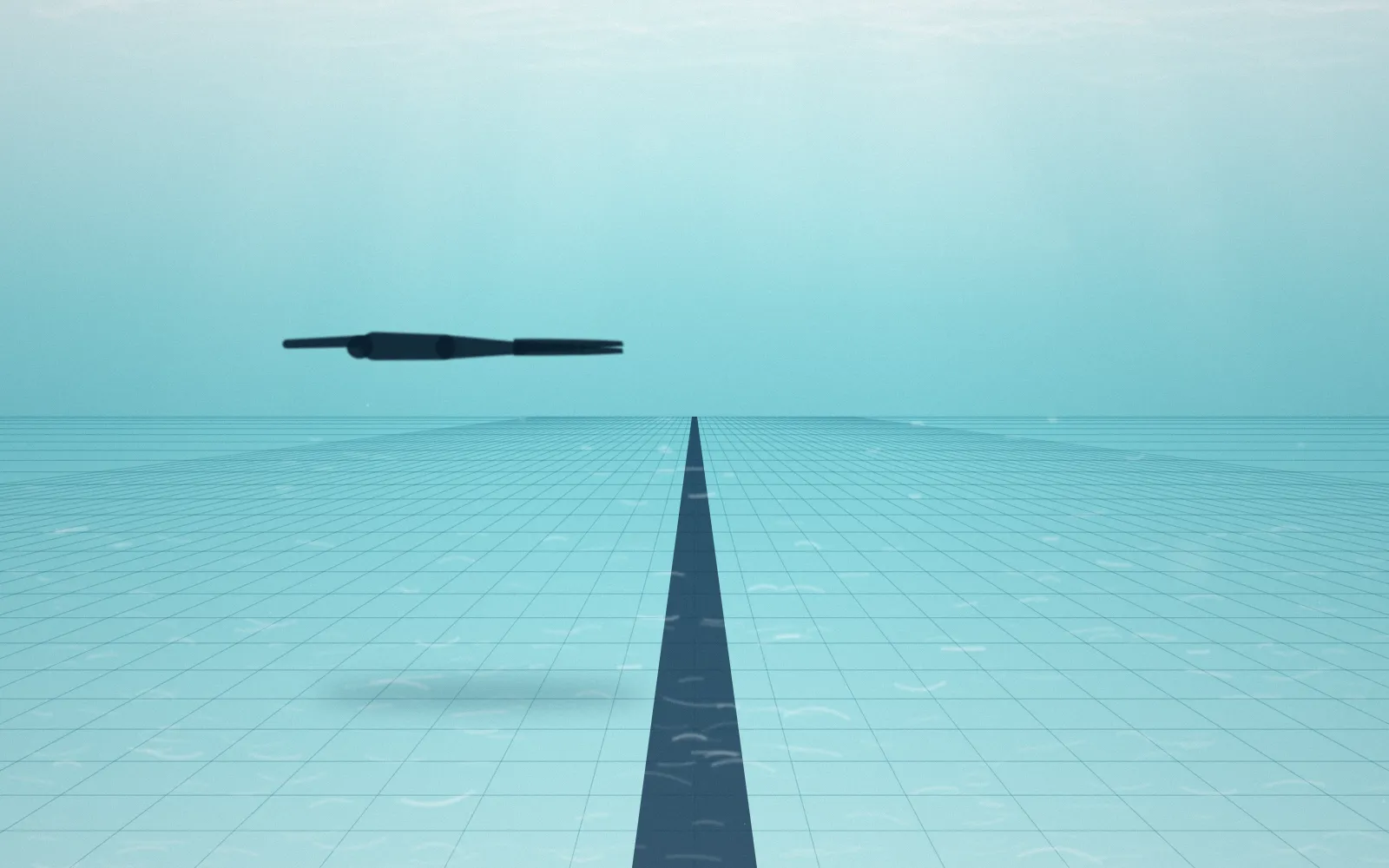
In the pool, the same rule applies horizontally. Look at the pool floor, not ahead along the lane. If you can see the wall coming, your head is too high. Use the black line on the bottom as your guide.
On the ascent, stay neutral too, and only glance up in the last few metres to check for the surface, the buoy and your buddy.
Arm position for different kinds of dive
There’s no single correct arm position. It depends on the discipline and on what your hands need to do.
| Situation | Common arm position | Why |
|---|---|---|
| Pool dynamic with bifins | Both arms overhead in a streamline, or both along the body | Overhead is sleeker; along the body is more relaxed for some |
| Pool dynamic with a monofin | Both arms overhead, hands stacked | The arms lead the body wave |
| Constant weight descent | One arm forward, the other hand at the nose | The leading arm finds the line; the other hand equalises |
| Freefall | One hand at the nose, the other along the body or loosely forward | Less drag, still ready to equalise |
| Ascent | Arms along the body, one hand overhead in the last metres | Relaxed, and the raised hand protects your head from the buoy |
A proper overhead streamline
Put one hand on top of the other, hooking the top thumb around the lower hand if that helps, and squeeze your upper arms against your ears. Stretch tall through the shoulders. If your shoulders are stiff, your arms sit in front of your head and your lower back arches to compensate. That’s a mobility problem as much as a technique one, and it’s worth working on out of the water.
Body line and core
Seen from the side, you want a straight line from your fingertips, or the top of your head, to your heels. The usual faults:
- Sagging hips. Often from tired legs or weighting that doesn’t suit the depth. The legs drop below the body line and drag.
- An arched back. Usually follows a lifted head or tight shoulders.
- Bent at the waist. Common in the first metres after a duck dive when you don’t fully straighten out.
- Wobbling hips. The kick is twisting your body. Engage your core lightly, as if someone were about to poke your stomach, without bracing hard.
Weighting affects body line too. A belt sliding towards your ribs on a head-down dive drags your hips out of position, which is one reason some divers prefer a neck weight. Our guide to freediving weighting covers the options.
Gear that ruins your streamline
Kit adds drag in small, sneaky ways.
- A dangling snorkel flaps about and can catch on the line. Many divers tuck it under the mask strap or into a wetsuit keeper, or leave it on the buoy during line training, agreed with their buddy.
- A loose wetsuit fills with water and adds friction. A smooth-skin outer surface and a close fit are both faster, as our wetsuit guide for Indian waters explains.
- Lanyards and computers should sit snug rather than swing.
- Long hair can be tied back or tucked under a hood.
Drills to fix your body position
Land: the wall streamline test
Stand with your back against a wall, heels a few centimetres from it, and get your bottom, shoulder blades and the back of your head touching the wall. Now raise your arms overhead in a streamline and try to touch the wall with your hands and the backs of your arms, without your lower back peeling away. Most people can’t at first. Practise for a minute a day, alongside the thoracic openers from our stretching guide, and it usually improves within a few weeks.
Pool: the push-off glide
Push off the pool wall underwater in a tight streamline and glide without kicking. Note where you stop against the lane markings. Repeat with your head slightly lifted, then with a neutral head, then with sloppy arms. The differences show up straight away. Each glide is a short breath-hold, so do this with a buddy watching.
Pool: eyes on the line
Swim surface lengths with a snorkel, eyes fixed on the black line on the pool floor and arms in a streamline. If your buddy sees your forehead creep up as you tire, that’s the habit to break.
Video from the side
Ask your buddy to film one length from the side. Pause in the middle of a glide and trace an imaginary line from your hands to your feet. Any curve, arch or dropped hip becomes obvious.
Safety: Glides, dynamic lengths and line dives are all breath-holds, even the short ones. Do them only with a trained buddy watching, never hyperventilate first, and keep pool lengths well inside your comfort while you focus on technique.
Open water: hand-in-view descents
On easy warm-up dives, keep your leading hand where you can see it, with your eyes resting on it. If it disappears from view because you’re looking past it at the bottom, your head has lifted. A clean body line also makes freefall smoother, because you sink straight instead of drifting away from the line.
Three things to check on your next dive
- Where are your eyes? On the line or your hand, not on the bottom or the wall.
- Where are your arms? Locked in a streamline or still along your body, not drifting.
- Is anything flapping? Snorkel, lanyard, loose suit, hair.
Check these on every warm-up dive until you stop needing to think about them. An online community for Indian freedivers is on its way here at freediving.in, so stay tuned.
Frequently asked questions
Should my arms be forward or by my sides in dynamic apnea?
Both are used. Arms overhead in a tight streamline is usually more hydrodynamic, but it needs good shoulder mobility and can feel tense. Arms along the body is more relaxed, and many bifin divers prefer it. Try both over several sessions with the same kick, count your kicks per length, and keep whichever lets you swim further with less effort.
Where should I look when freediving down the line?
At the line just in front of you or at your leading hand, with your head neutral and your chin slightly tucked. Looking down at the bottom lifts your head, arches your back and adds drag. On the ascent, keep the same neutral position and only glance up in the last few metres to check for the surface, the buoy and your buddy.
Why does my neck hurt after freediving?
Often because you hold your head lifted, looking down the line on depth dives or ahead along the pool, so your neck muscles work for the whole dive. A tight mask strap or a clenched jaw can add to it. Keep your head neutral and consciously relax your face and jaw. If the pain persists, see a doctor or a physiotherapist.
Does a wetsuit make you faster underwater?
A well-fitted freediving wetsuit with a smooth outer skin can reduce friction compared with a baggy rash guard or a loose suit, and it keeps you warm, which helps you relax. It also adds buoyancy, so you need to balance it with weights. A poorly fitting suit that lets water flush through will slow you down instead.