Duck Dive Technique: How to Start a Freediving Descent Cleanly
A practical guide to duck dive technique for freedivers: the movement step by step, why your legs do the work, the usual mistakes and pool drills to fix them.
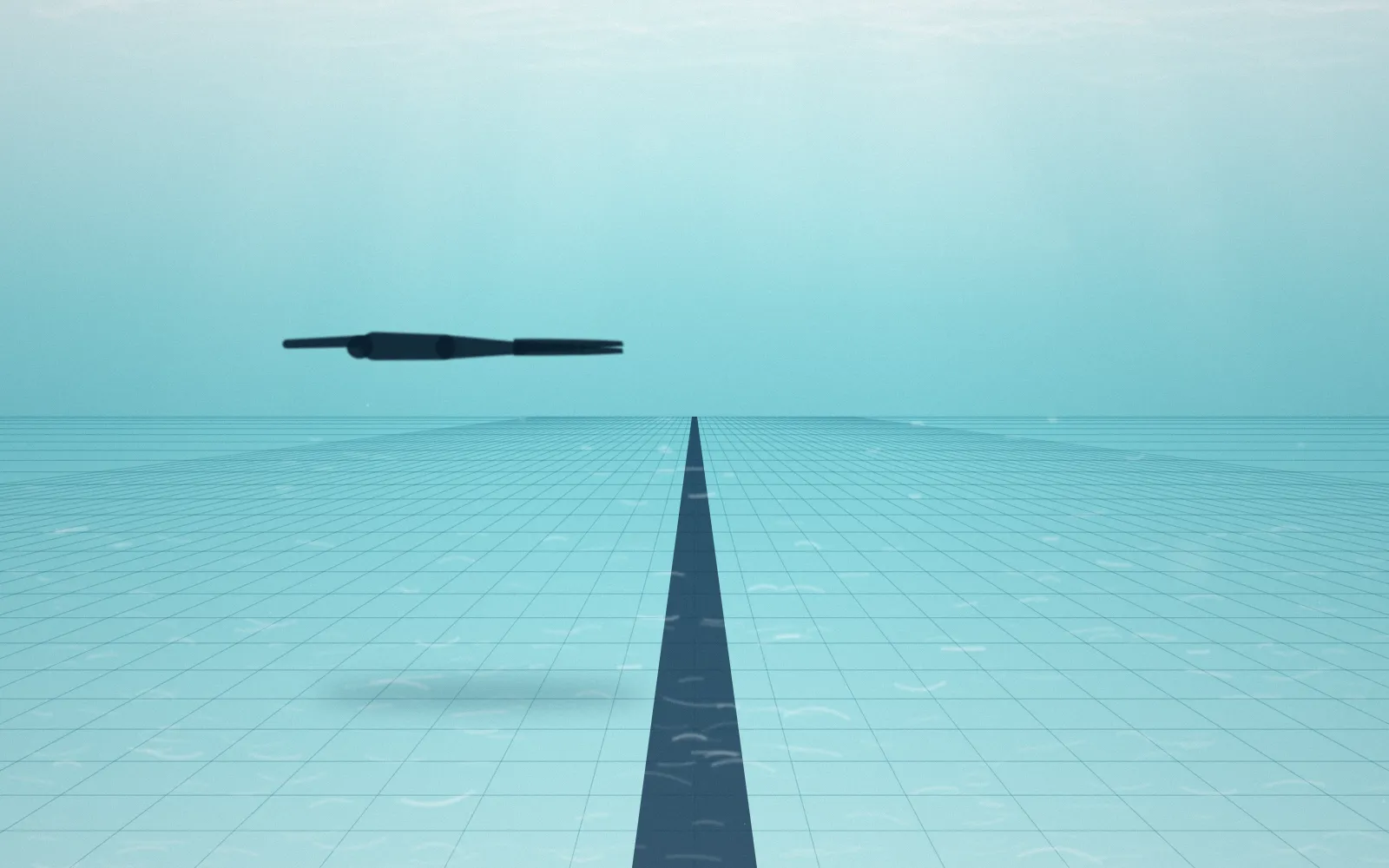
The duck dive is the move that takes you from floating flat at the surface to heading straight down, head first, without splashing or thrashing. Good duck dive technique comes down to three things: fold sharply at the hips, lift your legs vertically out of the water so their weight pushes you under, and stay still until your fins have sunk before you start kicking. Do that, and you’ll be a couple of metres down for almost no effort. Do it badly, and you’ll burn oxygen fighting the surface before the dive has properly started.
Beginners struggle with this more than with most in-water skills, mostly because it feels unnatural. Your instincts are to look where you’re going and to kick hard, and both work against you here.
Why a clean duck dive matters
The first few metres of any dive are where you’re most buoyant. Your lungs are full, your wetsuit’s neoprene is uncompressed, and the water wants to push you back up. A good duck dive uses gravity to get you through that zone. Your legs, lifted clear of the water, each weigh several kilograms in air, and that weight drives you down.
A sloppy duck dive costs you in three ways. You spend energy (and oxygen) kicking against buoyancy. You enter at an angle, so you drift away from the line or the spot below you. And you usually forget to equalise because you’re busy struggling, which matters more than people expect: the pressure change is proportionally largest near the surface, as our piece on pressure and Boyle’s law explains.
How to do a duck dive, step by step
Learn this in a pool or calm water with a buddy watching from the surface. Break it into stages before you string it together.
- Finish your breathe-up and take your last breath. Full and relaxed, not forced.
- Take the snorkel out of your mouth. Most courses teach you to descend without it, so you never have to blast water out of it with your first breath back at the surface.
- Pre-equalise. One gentle equalisation at the surface, so your ears start slightly ahead of the pressure.
- Glide forward, flat. Lie face down, body horizontal, with a little momentum from one or two easy kicks. You can’t duck dive well from an upright, treading-water position.
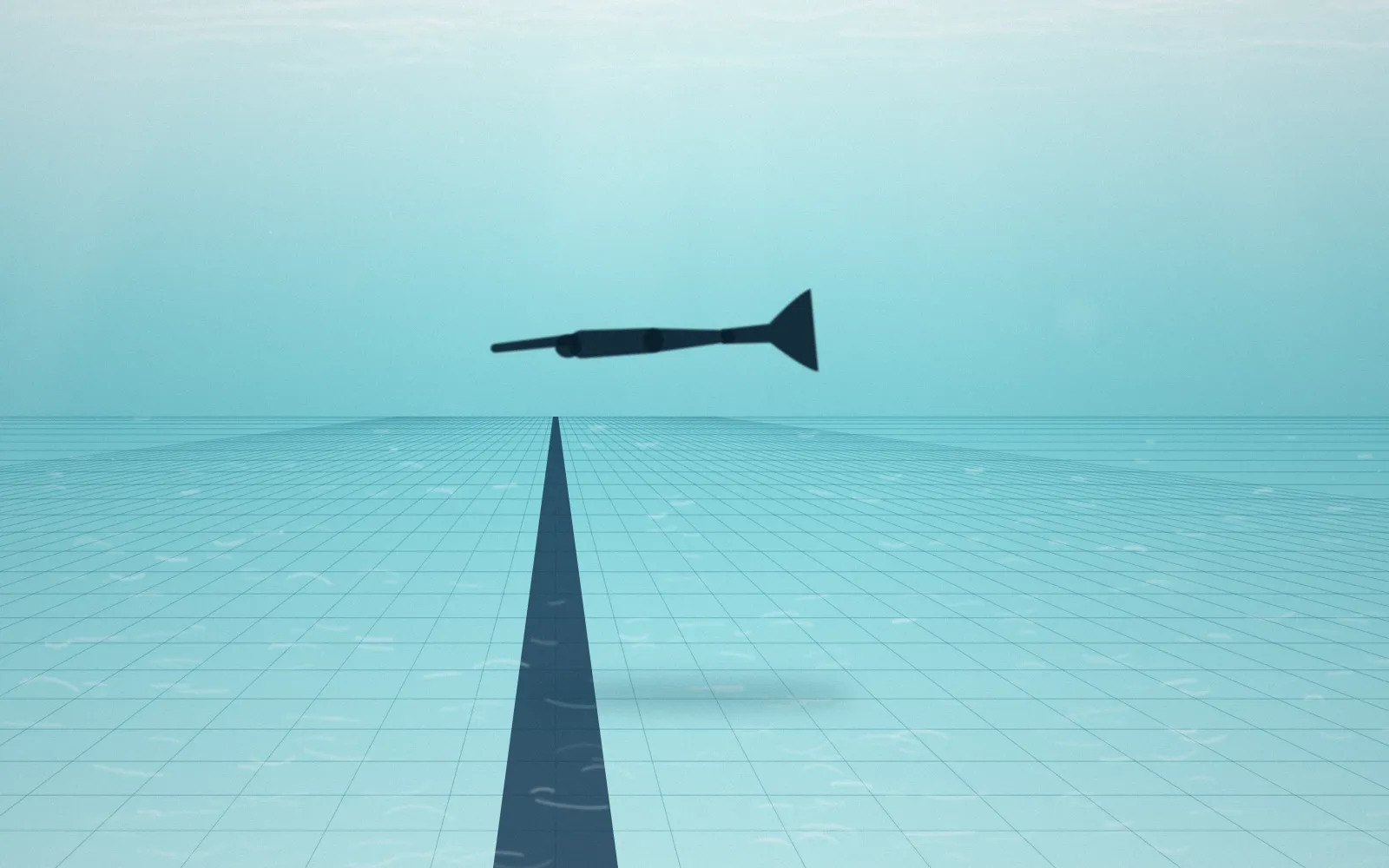
- Fold at the hips to about 90 degrees. Drop your head and chest towards the bottom and reach your leading arm downwards. Tuck your chin slightly rather than looking ahead. For a moment your upper body points straight down while your legs are still flat on the surface, like a half-closed pocket knife.
- Lift your legs straight up. Raise both legs, together or one after the other, until they’re vertical and in line with your torso. Knees straight, toes pointed. The legs go up, not forward.
- Stay still and sink. No kicking yet. Let the weight of your legs push you down until your fins are completely underwater, roughly a body length.
- Equalise again, early. Within the first metre, and then every metre or so after that, before you feel any pressure.
- Start kicking and settle in. Long, slow kicks from the hips, head neutral, eyes on the line or your hand rather than the bottom.
Steps 5 to 7 take about two seconds once you’ve got them. Slow them down in practice anyway.
Where your hands go
Most divers reach down with one arm, to find the line or simply to lead, and keep the other hand at the nose, ready to equalise. If you use the Frenzel technique, that hand stays there for the first part of the descent. Some instructors teach a small breaststroke-style pull with both arms as you fold, which helps if you’re very buoyant or diving without fins. Try both and keep whichever gives you the most vertical entry.
Common duck dive mistakes and how to fix them
Watch a group of students on their first open-water day and you’ll see the same handful of problems.
| Mistake | What happens | Fix |
|---|---|---|
| Bending the knees as the legs lift | Less weight above the water, fins slap down at an angle | Straight legs, pointed toes, lift from the hips |
| Lifting the head to look at the bottom | Back arches, you curve forward instead of down | Chin slightly tucked, eyes on your hand or the line |
| Kicking before the fins are under | Splash, noise, effort, very little movement | Count “one, two” in your head before the first kick |
| Folding only halfway | You slide in at a shallow angle and swim sideways | Hinge until your chest points straight down |
| Starting from upright | No glide, no fold, lots of struggle | Start every duck dive from a horizontal float |
| Forgetting to equalise | Ear pressure at 2–3 m, you abort or force it | Pre-equalise, then equalise again straight away |
| Rushing | Tension, and tension uses oxygen | Make the whole movement slower than feels necessary |
The bent-knee mistake is the most common of all. People pull their knees towards their chest to “get the legs up”, which feels efficient and isn’t. A straight, vertical leg has all its weight above the water; a bent one doesn’t.
When you’re too buoyant to sink
If you do everything right and still bob back up, the problem may be buoyancy rather than technique. A thick wetsuit with no weights will fight any duck dive. Our guide to weighting for freediving covers how to set up so you float at the surface without behaving like a cork.
Pool drills for a better duck dive
Indian city pools aren’t usually set up for freediving, but most have a deep end of three metres or more, which is plenty for this. Go at a quiet hour, tell the lifeguard you’re practising short breath-hold dives with a buddy, and keep one person at the surface watching the whole time.
Drill 1: the no-kick duck dive
Without fins, duck dive and try to touch the bottom of the deep end without kicking at all. You’ll probably only get partway at first. The fold and the leg lift should do most of the work. Five repetitions, with a full recovery between each.
Drill 2: count to two
With fins on, duck dive and count “one, two” before your first kick. If you hear or feel a splash, your fins were still in the air. Your buddy gives you a thumbs up for a clean, quiet entry.
Drill 3: the side view
Ask your buddy to film you from the pool deck, or from the side with a phone in a waterproof pouch. Pause the video at the moment your legs lift. You’re looking for a straight vertical line from fingertips to fins, and most people are surprised how far from vertical they actually are.
Drill 4: duck dive and stop
Duck dive, equalise twice in the first two metres, stop, hang for a moment and come back up. This makes equalising part of the duck dive rather than an afterthought. If equalising is the sticking point, our Frenzel technique guide has land drills to do before your next session.
Duck diving in open water, next to a buoy and line
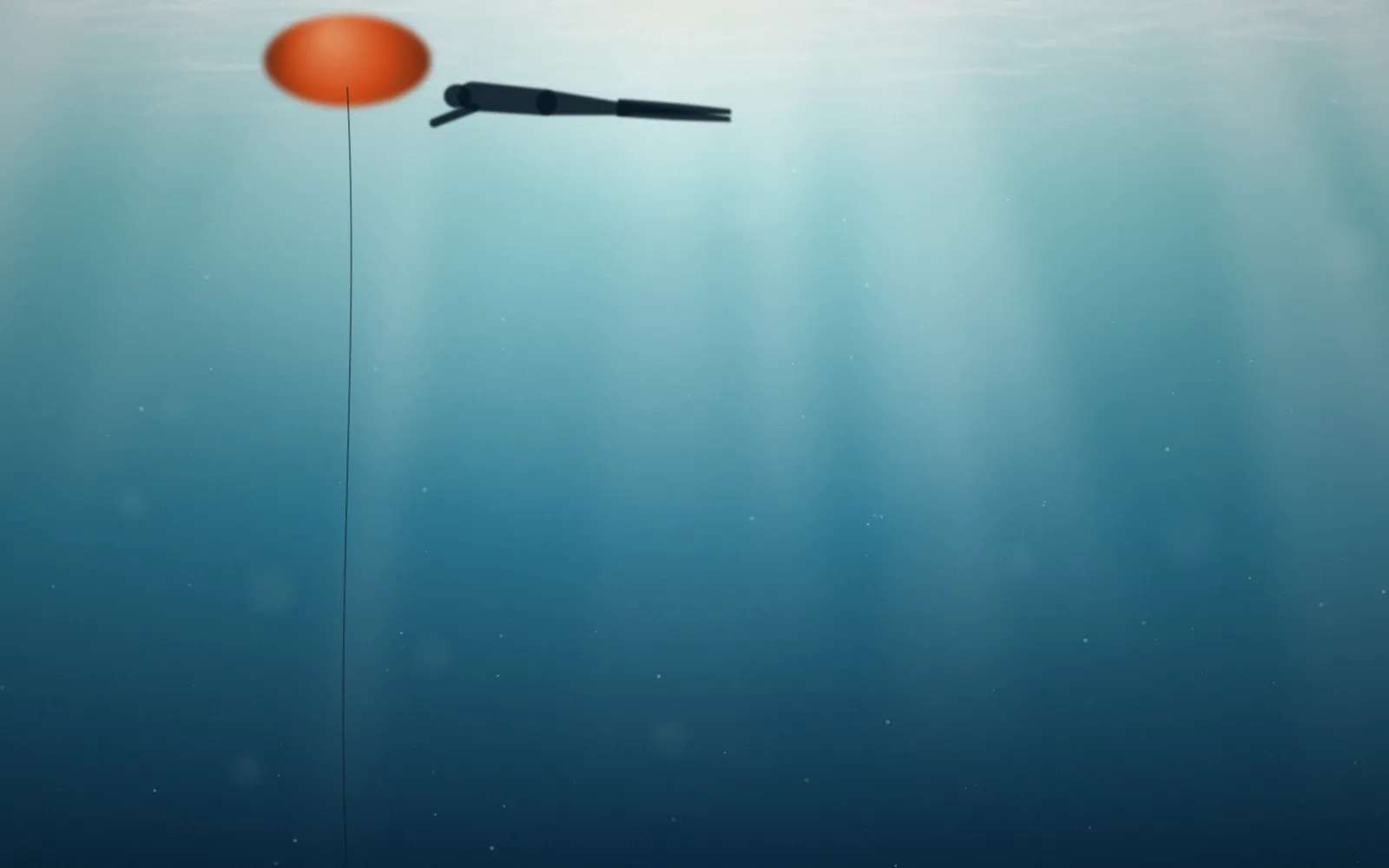
In the sea, you’ll usually duck dive beside a buoy with a line hanging below it. Position yourself a little away from the buoy so you don’t bump it as you fold, with the line within reach of your leading hand. Swell makes everything harder, so wait for a lull rather than folding into a wave that lifts you halfway through.
After the first few metres, the duck dive blends into your descent. From there, long relaxed kicks and a straight body take over, which is where finning technique and streamlining come in.
Safety: Every duck dive, even a two-metre one in a pool, is a breath-hold. Never practise alone, never hyperventilate before going down, and follow one-up-one-down so someone is always watching the diver underwater.
A ten-minute duck dive session for your next pool visit
You don’t need a long session. Ten focused minutes will do more than an hour of random dives.
- Two minutes: easy surface swimming with a snorkel and relaxed breathing to settle in.
- Three minutes: five no-kick duck dives without fins, full recovery between each.
- Three minutes: five duck dives with fins, counting to two before kicking, with your buddy filming at least one.
- Two minutes: three “duck dive and stop” repetitions, focused on equalising early.
Swap roles with your buddy so you both get the same work and the same rest. An online community for Indian freedivers is on its way here at freediving.in, so stay tuned.
Frequently asked questions
Why do I keep floating back up after a duck dive?
Usually it is one of three things: your legs are not vertical when they lift, you start kicking while your fins are still in the air, or you are simply too buoyant. A thick wetsuit with no weight, or very salty water, can make a clean duck dive almost impossible. Fix the leg position first, then check your weighting with an instructor.
Should you exhale before a duck dive?
No. Snorkellers sometimes breathe out to sink more easily, but freedivers descend on a full, relaxed breath. That air gives you oxygen for the dive and the volume you need to equalise your ears on the way down. Exhale dives do exist as an advanced training method, but they should only be done under an instructor's supervision.
Can you duck dive without fins?
Yes. Without fins you rely more on the fold at the hips and the weight of your legs, and many divers add a breaststroke-style arm pull as they go under. It is a useful drill even if you normally wear fins, because it shows whether your body position, rather than hard kicking, is doing the work.
How deep should beginners go when practising duck dives?
Two to five metres is plenty. The point of the drill is a clean, vertical entry and early equalising, not depth. The deep end of a pool or a sandy patch in calm water works well. Always have a buddy watching from the surface, and end the session if your ears start to hurt or you feel tired.