Freediving Finning Technique: How to Kick With Bifins
Better freediving finning technique for long bifins: kick from the hips, keep your legs long, get amplitude and pace right, and stop bicycling with pool drills.
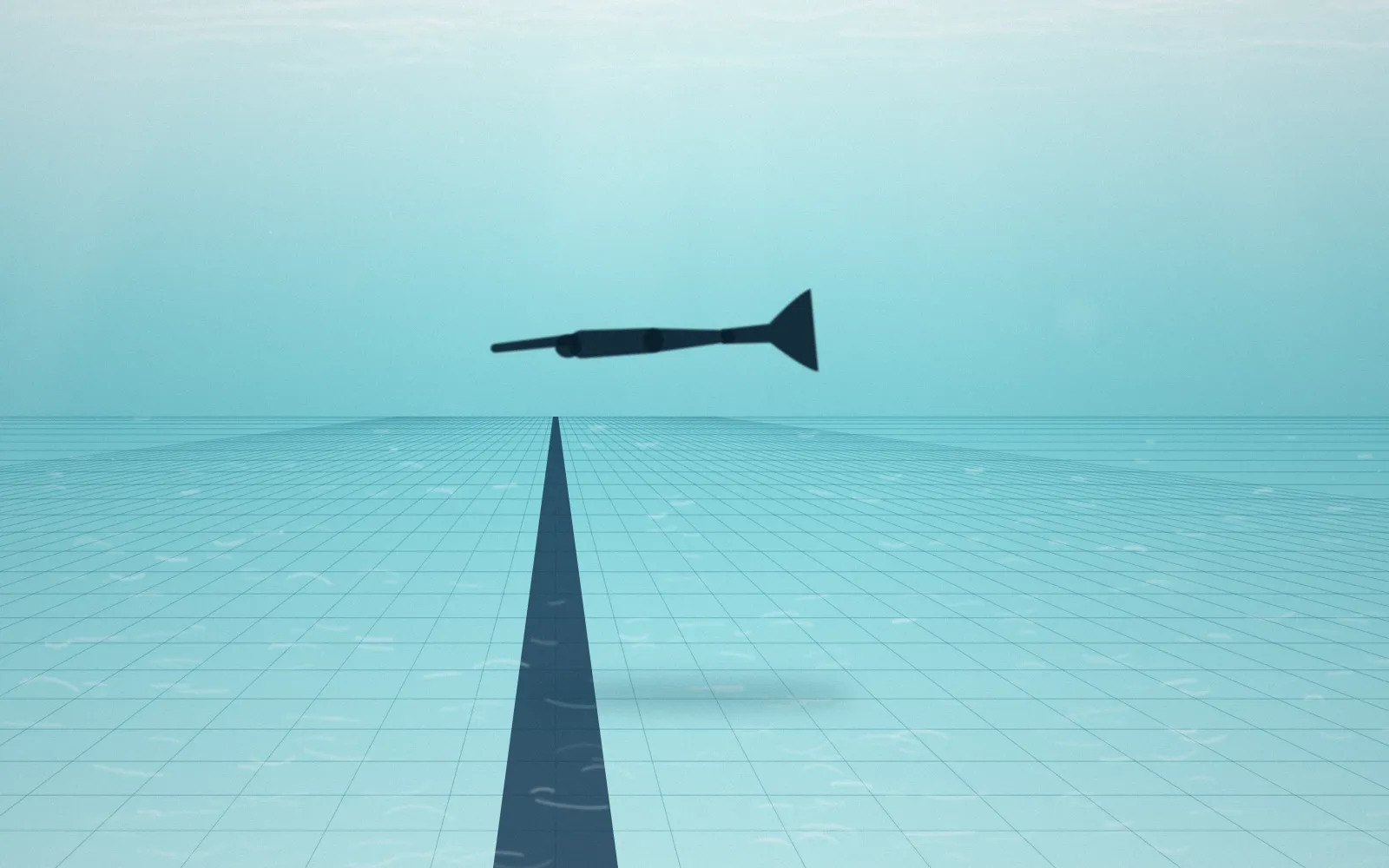
Good freediving finning technique means kicking from the hips with long, nearly straight legs, pointed toes and a slow, steady rhythm, so the long blades bend and spring back and do most of the work for you. The kick stays narrow enough that your fins move in the water your body has already pushed aside. From the outside it looks almost lazy. That’s the idea: a relaxed, efficient kick carries you further on each breath-hold, whether you’re swimming a pool length in Pune or descending a line in the Andamans.
Most people arrive at freediving with a kick learned somewhere else. Swimmers flutter fast with bare feet; scuba divers pedal their knees with short, stiff fins. Both habits need some unlearning.
How the bifins kick works
Long freediving fins are built to flex. When you push the blade through the water it bends, and as it straightens it pushes water backwards and you forwards. Your job is to load the blade with a smooth, long movement and give it time to spring back. Stab at it quickly and the blade never fully bends. Shove it hard with a locked leg and you mostly just tire your thighs.
The movement starts at the hips. Your thighs drive the kick, your knees stay soft but mostly straight, and your ankles stay extended so the blade continues the line of your shin. Think of each leg as a long, slightly springy lever with the fin on the end.
The downkick and the upkick
When you’re face down in a pool, the downkick is the power stroke. The hip flexes, the thigh drives down, and the knee bends a little as the water presses on the blade, then straightens at the end of the stroke. The upkick brings the leg back up with a straight knee, using your glutes and hamstrings.
Beginners often treat the upkick as a rest and let the leg drift back up. A firm, straight-legged upkick adds propulsion and keeps the kick symmetrical. On a vertical descent or ascent neither direction is “down”, so you want both halves pushing.
Amplitude: how wide to kick
Kick too wide and your fins stick out beyond your body’s outline, adding drag. Kick too narrow and the blades barely bend. A common cue is to keep the fin tips moving within a band not much wider than the depth of your body from chest to back. If your buddy, watching from in front, can see your fins sweeping well outside your silhouette, narrow it.
Frequency: how fast to kick
Slower than you think. A long blade needs time to bend and recover, and a frantic kick usually means the blade is doing less while you work harder. There’s no single correct pace, because it depends on fin stiffness, leg strength and what part of the dive you’re in. A useful test: if you can’t hold the kick smoothly for a whole pool length without your thighs burning, it’s too fast or too forceful.
Common finning mistakes and what they feel like
- The bicycle kick. Knees come up towards the chest and the lower leg does the work, as if pedalling. The fins push water down instead of back. You feel it in your knees and the front of your thighs, and you don’t go far.
- Hooked ankles. Toes pull up towards the shins, so the blade sits at an angle to the leg and much of the push goes downwards. Point your toes.
- Locked, rigid legs. The opposite problem. A completely stiff leg tires the hip flexors quickly and stops the blade flexing smoothly. Keep a little give in the knee.
- Splashing at the surface. Fins breaking the surface on a surface swim or just after a duck dive. Sink a little lower, or wait until your fins are fully under before kicking.
- Scissoring and twisting. One leg kicks harder or wider than the other and your hips rock. This is often a flexibility or strength imbalance, and it shows up clearly on video.
- Arms joining in. Hands paddling or drifting out to the sides for balance. Keep the arms still, either in a streamline or along your body.
Ankles, hips and the land work behind a good kick
Ankle flexibility matters more than most people expect. If your ankle can’t extend fully, the blade sits at an angle to your leg and part of every kick is wasted pushing water the wrong way.
One stretch most Indians already know is vajrasana: kneel and sit back on your heels with the tops of your feet flat on the floor. Put a folded towel under your ankles if it’s uncomfortable at first, and build up to a minute or two while the chai cools. Calf stretches against a wall balance it out.
Hip mobility and glute strength power the upkick. Bridges, lunges and gentle hip flexor stretches are a good start, and our posts on strength and cardio for freediving and yoga for freedivers have fuller routines.
Pool drills to build a better kick
You need a pool that allows long fins, and not all of them do. Ask the management, go at quiet hours, and be ready to explain what freediving is. Our pool training guide has advice on crowded lanes and lifeguards who haven’t seen breath-hold training before.
Most of these drills are done at the surface with a snorkel, so you can focus on the kick without a breath-hold.
Vertical kicking in the deep end
Float upright in deep water with your arms crossed over your chest and kick to keep your head above the surface. If you bicycle, you sink. If you kick from the hips with long legs, you stay up with surprisingly little effort. Do 30 seconds on and 30 seconds off, five rounds.
Side kicking along the wall
Lie on your side at the surface, lower arm stretched forward, face in the water and breathing through a snorkel. Kick along the length. In this position you can see your own legs, and it trains a kick that pushes back rather than up and down.
Count your kicks
Swim a 25 m length at the surface with a snorkel at an easy pace and count your kick cycles. Rest, then swim it again with longer, slower kicks, aiming for fewer at the same easy effort. Write the numbers in your freediving log so you can watch the trend over a few weeks.
Filmed lengths
Have your buddy film you from the side and from the front. Look for knee bend, ankle angle, how wide the kick is compared with your body, and whether both legs match. Watch it slowed down if your phone allows, because a lot happens in one kick cycle.
Short underwater swims
Once the kick feels good at the surface, try it underwater over short distances, well within your comfort, with your buddy following along on the surface. This is where your kick meets your breath-hold and efficiency starts to show.
Safety: Any underwater swim is a breath-hold, and pool dynamics are where many shallow water blackouts happen. Never swim underwater alone, never hyperventilate first, and make sure your buddy follows you along the length and is ready to help when you surface.
Kicking in open water and at depth
In the sea the kick stays the same, but the demands change through the dive. On the way down you fight buoyancy for the first several metres, so the kick needs to be strong but still long. Once you become negatively buoyant you can reduce and then stop kicking, as our guide to freefall explains. On the way up you’re heaviest at the bottom, so the first kicks off the turn are the hardest of the whole dive. Make them long and powerful without sprinting, and ease off as you rise and get lighter.
Fin choice affects all of this. Very stiff blades punish poor technique and tire weaker legs, and many people learn better on a softer plastic blade. Our freediving fins guide compares materials and stiffness.
Your next three pool sessions
- Session one: vertical kicking and side kicking at the surface, ten minutes of each. No breath-holds needed.
- Session two: counted 25 m surface lengths with a snorkel. Note your number, then try to cut it by two or three kicks at the same relaxed effort.
- Session three: filmed surface lengths, then a few short underwater swims with your buddy watching. Compare the video with the mistakes list above.
Do vajrasana and calf stretches on the days in between. We’re building an online community for Indian freedivers. It’s coming soon, so stay tuned.
Frequently asked questions
Why do my calves cramp when I use long fins?
Cramps usually come from blades that are too stiff for you, tight or weak calves, cool water or dehydration, and often a mix of these. Try a softer blade, stretch your calves and ankles regularly, warm up with easy surface kicking and drink enough water, especially in Indian heat. If a cramp hits underwater, signal your buddy, surface calmly and pull the fin tip towards you to stretch the calf.
Should freedivers bend their knees when kicking?
A little, and passively. The knee flexes slightly under the water's pressure on the blade during the downkick, then straightens at the end of it. What you want to avoid is actively pulling the knees towards your chest, the so-called bicycle kick, which pushes water downwards rather than backwards. The movement should start at the hips.
Can I use scuba fins for freediving?
You can start with them, especially in a pool, but short scuba fins suit a different kick and you will get less from each stroke. Long freediving blades reward a slow, straight-legged kick from the hips. If you are training regularly, a basic pair of plastic long-blade fins is usually the first big gear upgrade after a good mask.
How long does it take to fix a bicycle kick?
Most people improve noticeably within a few sessions once they see themselves on video and start kicking from the hips. Making the new kick automatic takes longer, often a couple of months of regular pool time. Short, frequent sessions with drills and feedback tend to work better than occasional long swims, where the old habit creeps back as you tire.