A Short History of Freediving: From Pearl Divers to Competition
The history of freediving, from the ama, haenyeo and the pearl divers of the Gulf of Mannar to Maiorca, Mayol, The Big Blue and the founding of AIDA in 1992.
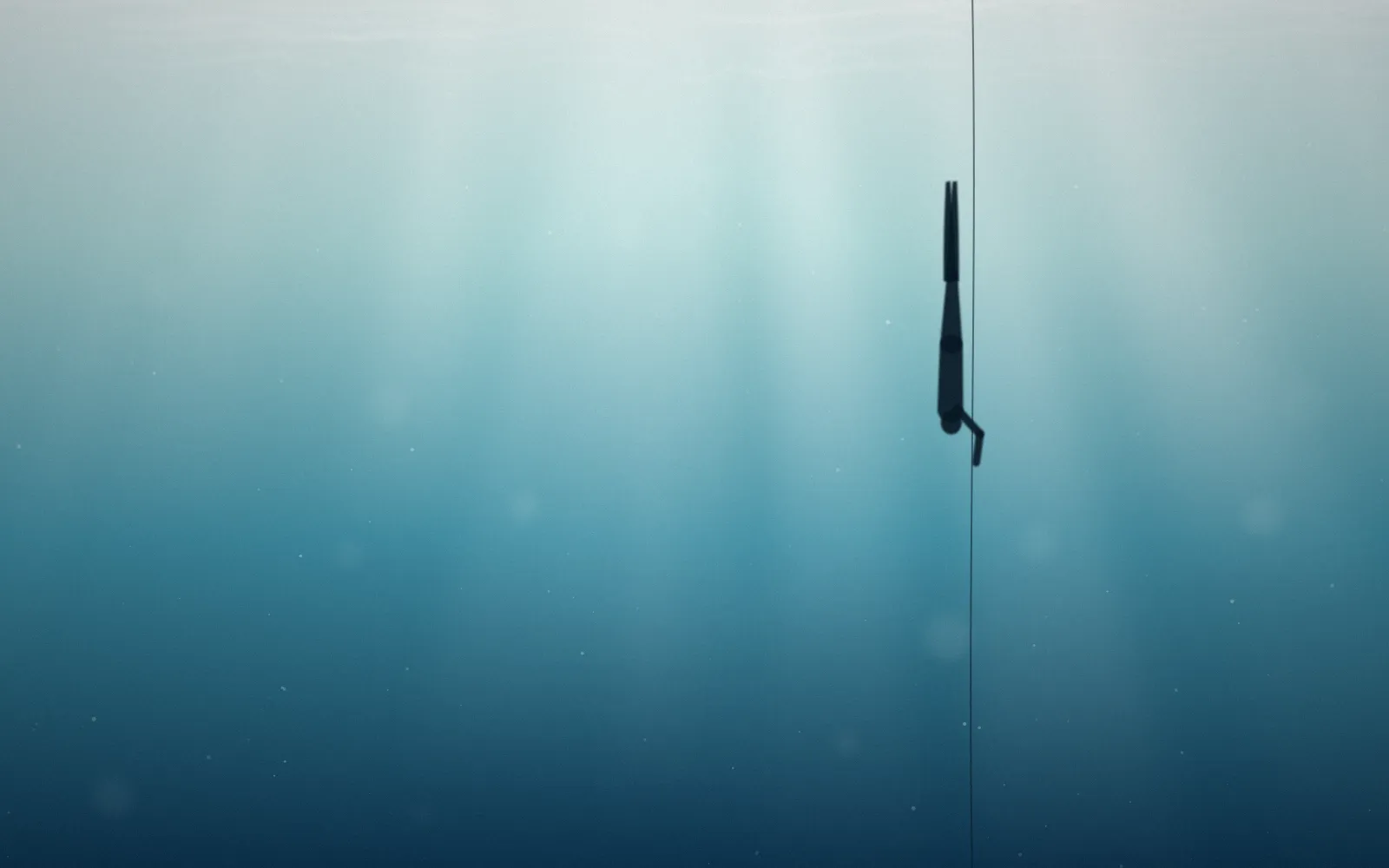
The history of freediving goes back thousands of years, to people who dived on a single breath for food, pearls, sponges and shells. Working traditions like the ama of Japan, the haenyeo of Korea’s Jeju Island, the Bajau of Southeast Asia and the pearl and chank divers of the Gulf of Mannar in Tamil Nadu kept breath-hold diving alive for centuries. Freediving as a sport is far younger: depth records began in the mid-twentieth century, and AIDA, the international freediving federation, was founded in 1992.
Diving for a living: the oldest freedivers
Long before anyone counted metres, people dived because the sea paid. Shellfish, sponges, pearls and coral were all harvested on a breath-hold, and in many coastal communities diving was a family trade passed down through generations.
In the eastern Mediterranean, Greek island communities such as Kalymnos became famous for sponge diving. In the Persian Gulf, pearl divers descended with a stone weight on a rope, worked the oyster beds and were hauled up by a partner in the boat, sometimes using simple nose clips. The methods were similar across oceans because the problem was the same: get down fast, work briefly, get back up.
These divers weren’t chasing depth for its own sake. They went as deep as the oysters or sponges were, as many times a day as the season demanded.
The pearl and chank divers of the Gulf of Mannar
India has one of the oldest pearl-diving traditions in the world. The Gulf of Mannar, the shallow sea between the southern Tamil Nadu coast and Sri Lanka, held rich pearl oyster beds, and its pearl fisheries are mentioned in ancient sources. Marco Polo described pearl diving along this coast in the late thirteenth century.
Thoothukudi, still known as the Pearl City, was at the centre of the trade, and the Paravar community of the coast is historically associated with pearl fishing. Divers typically went down with a stone, gathered oysters into a net or basket, and were pulled up by rope by helpers in the boat, repeating the cycle many times a day during the fishing season.
The same waters supplied the sacred chank, the conch shell blown in temples and used for bangles, and chank diving continued alongside pearl fishing. The large pearl fisheries faded during the twentieth century as the beds declined. Today the Gulf of Mannar is a protected marine national park and biosphere reserve, so diving there is tightly regulated.
Ama, haenyeo and the Bajau: traditions that survived
Some working traditions are still alive.
The ama of Japan are breath-hold divers, mostly women, who harvest abalone, shellfish and seaweed. The tradition is said to go back two thousand years or more. Ama are known for a distinctive whistling exhale when they surface, a working cousin of the recovery breathing taught on freediving courses today.
The haenyeo of Jeju Island in South Korea are women divers who gather abalone, sea urchins and other seafood without breathing equipment, often well into old age. In 2016, the culture of Jeju haenyeo was added to UNESCO’s list of the Intangible Cultural Heritage of Humanity.
The Bajau of the Philippines, Malaysia and Indonesia are often called sea nomads, and many spend long hours diving for fish. A study published in the journal Cell in 2018 reported that Bajau people have larger spleens than a neighbouring land-based group, suggesting a genetic adaptation to diving. That links neatly to the spleen effect in freediving, which every freediver experiences in a milder form.
All of these divers rely on the same physiology you have, including the mammalian dive reflex that slows the heart when your face meets cold water.
Stathis Chatzis and the anchor of the Regina Margherita
The first deep freedive to be widely documented happened in 1913. The Italian battleship Regina Margherita had lost an anchor off the Greek island of Karpathos, and a Greek sponge diver named Stathis Chatzis was brought in to help find it.
Using a skandalopetra, a flat stone tied to a rope, Chatzis reportedly made repeated dives to somewhere around 70 to 80 metres and helped attach a line to the anchor. Accounts from the time differ on the exact figures, but the story is usually cited as the moment the outside world realised how deep a trained breath-hold diver could go.
The depth race: Bucher, Maiorca and Mayol
Freediving as a contest of depth began after the Second World War. In 1949 the Italian Raimondo Bucher reportedly descended to 30 metres off Capri on a wager, and this is often cited as the first modern depth record.
At the time, some physiologists predicted that the human chest would be crushed somewhere around 30 to 50 metres, reasoning from how air compresses with depth. Divers kept passing those limits. It took later research on blood shift, where blood moves into the chest to protect the lungs, to explain why. Our guide to pressure, depth and Boyle’s law explains the physics they were working from.
Through the 1960s and 1970s, two men dominated the headlines. Enzo Maiorca, from Syracuse in Sicily, was often described as a diver of power and willpower. Jacques Mayol, a Frenchman born in Shanghai, took a calmer approach influenced by yoga and meditation, and was fascinated by dolphins. Their rivalry pushed depths far beyond what scientists had thought possible. In 1976 Mayol reached 100 metres using a weighted sled, widely reported as the first person to do so on a single breath.
The Big Blue and the birth of modern competition
In 1988 the French director Luc Besson released The Big Blue (Le Grand Bleu), a film loosely based on the Mayol and Maiorca rivalry. Jean-Marc Barr played Mayol, and Jean Reno played a fictional Italian rival named Enzo Molinari. Maiorca reportedly objected to the portrayal. The film became a cult favourite, especially in France, and is widely credited with drawing a new generation into the water.
In 1992, AIDA was founded in France. It gave freediving standard disciplines, judging rules, a surface protocol and a system for recognising records, turning a series of individual stunts into a structured sport. Alongside CMAS, which had been founded in 1959 and covers many underwater sports, AIDA shaped the competitive disciplines described in freediving disciplines explained.
The decades that followed produced famous names. Umberto Pelizzari became one of Italy’s best-known freedivers and later an influential teacher. Natalia Molchanova of Russia set many records and helped build freediving education before she disappeared while diving recreationally off the Spanish coast in 2015. Her son, Alexey Molchanov, is himself one of the best-known competitors in the sport. More recently, documentaries such as The Deepest Breath (2023) have introduced the sport to audiences who had never heard of it; our list of freediving books and films has more.
Freediving today: from records to recreation
For all the attention records get, most freedivers today never compete. They learn on two- to four-day courses, dive on a line beneath a buoy with a buddy, and train in pools and on land between trips. Freediving centres have grown up in places with calm, deep water close to shore, and Indian divers now learn in the Andamans and other coastal spots as well as abroad.
The biggest change from the old days is the safety culture. One up, one down, structured surface protocols, long surface intervals and the rule against hyperventilation all come from hard lessons learned over decades.
What the old divers got right, and what we’ve changed
Some traditional methods survive almost unchanged in modern training. Others have been replaced for very good reasons.
| Traditional practice | Modern equivalent |
|---|---|
| A stone and rope to descend fast | Free immersion on a line, with weights set for safety |
| A partner hauling the diver up by rope | Counterballast systems and trained safety divers |
| The ama’s whistling exhale on surfacing | Structured recovery breathing |
| Dozens of working dives a day | Short sessions with generous surface intervals |
| Learning from childhood, by imitation | Structured courses with certified instructors |
That fourth row matters most. Pearl divers in the Tuamotu islands of the Pacific gave freediving the word taravana for the illness that followed long days of repeated deep diving with short rests, now understood as a form of decompression sickness. Our article on decompression sickness and taravana explains how modern divers avoid it.
Safety: Historical divers worked under pressures no recreational diver should copy. Never dive alone, never hyperventilate, keep surface intervals generous, and treat every breath-hold in water as something that needs a trained buddy watching.
The freediving.in community is coming soon. Stay tuned.
Frequently asked questions
Who is considered the father of modern freediving?
There is no single founder. Raimondo Bucher's reported 30-metre dive off Capri in 1949 is often cited as the start of modern depth records, while Enzo Maiorca and Jacques Mayol made deep freediving famous in the 1960s and 1970s. Mayol in particular is associated with the relaxed, yoga-influenced approach that shaped how freediving is taught today.
Is The Big Blue based on a true story?
Only loosely. Luc Besson's 1988 film draws on the real rivalry between Jacques Mayol and Enzo Maiorca, but the plot, the romance and most events are fictional, and the Maiorca-inspired character was renamed Enzo Molinari. Maiorca reportedly objected to the portrayal. The film is better treated as a love letter to the sea than a documentary.
How did ancient divers go deep without any equipment?
Working divers used simple, clever tools. Many descended holding a heavy stone tied to a rope, which carried them down quickly and saved effort, and helpers in a boat hauled them back up. Most started diving young and dived nearly every day. The costs were high, though: ear damage, exhaustion and deaths were part of the trade in many places.
When did freediving become a competitive sport?
Individual depth record attempts began around the middle of the twentieth century, usually as one-off challenges between a handful of divers. Freediving as an organised competitive sport, with standard disciplines, judges and surface protocols, took shape after AIDA was founded in 1992, and international championships followed during the 1990s. CMAS, the older underwater sports federation, also runs freediving competitions today.